• Skip to primary navigation
  • Skip to main content
  • Skip to primary sidebar

Penny Travels

Travelling the world, near and far, one step at a time.

  • Home
  • Travel Destinations
  • Transport
  • Tourist Brown Signs
  • Tube Stop Baby Challenge
  • About Penny
  • Privacy Policy and Disclosure

Planning an Interrail Journey Across Europe

August 17, 2026 by Penny Leave a Comment

One of the first conversations that my husband and I ever had was about an urge we both had to travel across Europe by train. I took a year out between school and university, but worked throughout that year. Later on I started travelling, but apart from trips to Finland, Estonia, Sweden and Germany in the summer after uni I’ve always otherwise been limited by how much leave I can take from work, and then in later years by school holidays. It seemed that the chance to go interrailing had passed me by, but that is definitely not the case and I rectified the situation this summer.

I’m lucky enough to have travelled in Europe a fair bit already and last summer all five of us took the Eurostar from London through to Rotterdam and this ignited a bit of a spark of an idea in us. A bit of research showed us that an interrail pass definitely isn’t just limited to students with backpacks, and also, modern technology and phone apps in particular have changed how the system works somewhat.

Initial sources of inspiration and information

One of the best sources of information I found when initially researching our trip was the excellent Man in Seat 61 website. There isn’t much that Mark, the man behind the site, doesn’t know about train travel. He’s worked for various train companies and even the Department for Transport here in the UK, but since 2007 he’s worked full time on his excellent Seat 61 site which provides everything from route suggestions through to walk through descriptions of train stations across Europe and step by step guides into buying train tickets or rail passes to undertake adventures.

It was through him and various European train travel related Facebook groups that I came to realise that interrail fans came in all different shapes and sizes, and that rail travel across Europe was no where near as mysterious as it at first sounded. An interrail pass is relatively easy to purchase from Interrail’s own website. There are however a vast array of passes to choose from, depending on how long you want to travel for and how many days you plan to actually use trains in that time.

How does an Interrail pass work?

In the “olden days” it was simply the case that once you had an Interrail pass all trains were free. You simply hopped on the one you fancied, showed your paper pass to the guard or ticket inspector and that was it. In these modern days of mandatory seat reservations it’s not so simple. Firstly, whilst you can still request a paper pass, most people use the app version, which is excellent.

Some trains do require mandatory seat reservations though. Depending on which country you are in these can range from being free, or just €3 each, through to being significantly more. When you come to actually using the trains with your pass you can find out the exact costs, but the headline thing to bear in mind is that if you’re starting in the UK you will need to pay a significant seat reservation fee to travel on Eurostar out of St Pancras (and back in again) and also on most high speed trains across France. It is still the case that you can join most regional trains for free, but depending on how far you want to travel, it is likely to that high speed trains will form part of your journey so budget accordingly.

In/out travel days

The second thing to point out is that with a pass you get two travel days only in your home country. So if you’re in the UK, like we are, you get one travel day to leave the country, and a second to return. For the other days it doesn’t matter how many countries you use your pass in, and it is not mandatory to use the pass in your own country. Some people choose to head out of the UK by train and then fly back from their end destination (which is what we ended up doing), whilst others might do that in reverse. Some people use a cheap flight to get to their train starting point, and possibly the same at the end of their journey. This does mean that if you plan to break your outward or return journey in London, think carefully about how you use your pass.

First or second class?

This is a question that I hadn’t even contemplated before buying an Interrail pass. Train travel in the UK is mainly in my experience in standard class. First class tickets are vastly more expensive, and are only a rare treat when you spot a deal or use a site like Seatfrog to bag an upgrade.

In mainland Europe First Class isn’t quite so unattainable. The difference in prices is less and you see more normal people choosing to travel that way. If you’re travelling some distance in the UK before getting to mainland Europe remember that a First Class interrail pass will be valid for your journey to and from London if you plan to connect with the Eurostar there. That means you can enjoy First Class on LNER, Avanti West Coast or GWR on your way to London, and that often includes a meal on the train too. This isn’t the case in all other European countries but saving the cost of a meal should again factor into your budgeting decisions.

Travelling with children or as a senior

Youth interrail passes (from the age of 12 up to 27) are cheaper than standard adult tickets, but it is worth noting that there are also reduced price tickets for seniors (age 60+). In addition to all this, if you are travelling with a child who is 11 or younger then their pass is free. Yes, free. £0. Even if it is a first class pass. Travelling with a seven year old this was music to my ears! Seat reservation fees are still applicable, but it makes them much more palatable when it’s on top of a free ticket!

Look for offers

Before buying out Interrail passes I registered on the Interrail site for their mailing lists and started to receive offers from them. At points there was 10% off passes that were to be used in certain months, at other points the passes had their usual 11 month validity (as standard you get 11 months from buying your interrail pass to activate it and start travelling).

I had also heard about how in the past Interrail had had a large Black Friday sale which involved 25% off all Interrail passes. This isn’t guaranteed to happen every year, but having seen it in the past I thought it worth holding out and seeing and bingo the email arrived telling me there was going to be 25% off all passes, including first class ones! Bargain. It makes a first class pass at the reduced price less than you would pay for a standard class one outside of the sale. Buying in a sale months before you plan to travel also helps you to spread the cost of your trip somewhat.

Where to go

Once you’ve decided on the type of pass to go for, how many days you want, and whether to go first class or not you have hopefully managed to take advantage of a sale and have your passes secured. You register a passenger’s name and passport details at the time of purchase, but you don’t then need to do anything else with them until just before your trip when you’re ready to activate them. Just make sure you know how long you have before you have to activate your pass. It’s usually 11 months, but these Ts & Cs might change in some sales.

They you’re on to the fun part – deciding where to go. You might have a general idea in mind like – let’s go to Italy, or Switzerland – but how do you see where it is possible to go, as obviously you are restricted slightly on where there are train tracks!

Every year the European Rail Timetable is published which sets out across multiple countries exactly which trains go where when. You can buy this as a big paperback book (the 2026 version is available here) but you can also access the data in it electronically through the Rail Europe website. Again, this is all super once you’ve decided where to go and just want to know what time of day trains run, but there’s a step before that that I think is only really sorted with a paper map.

Paper Maps

When we started planning I went online and bought myself two maps.

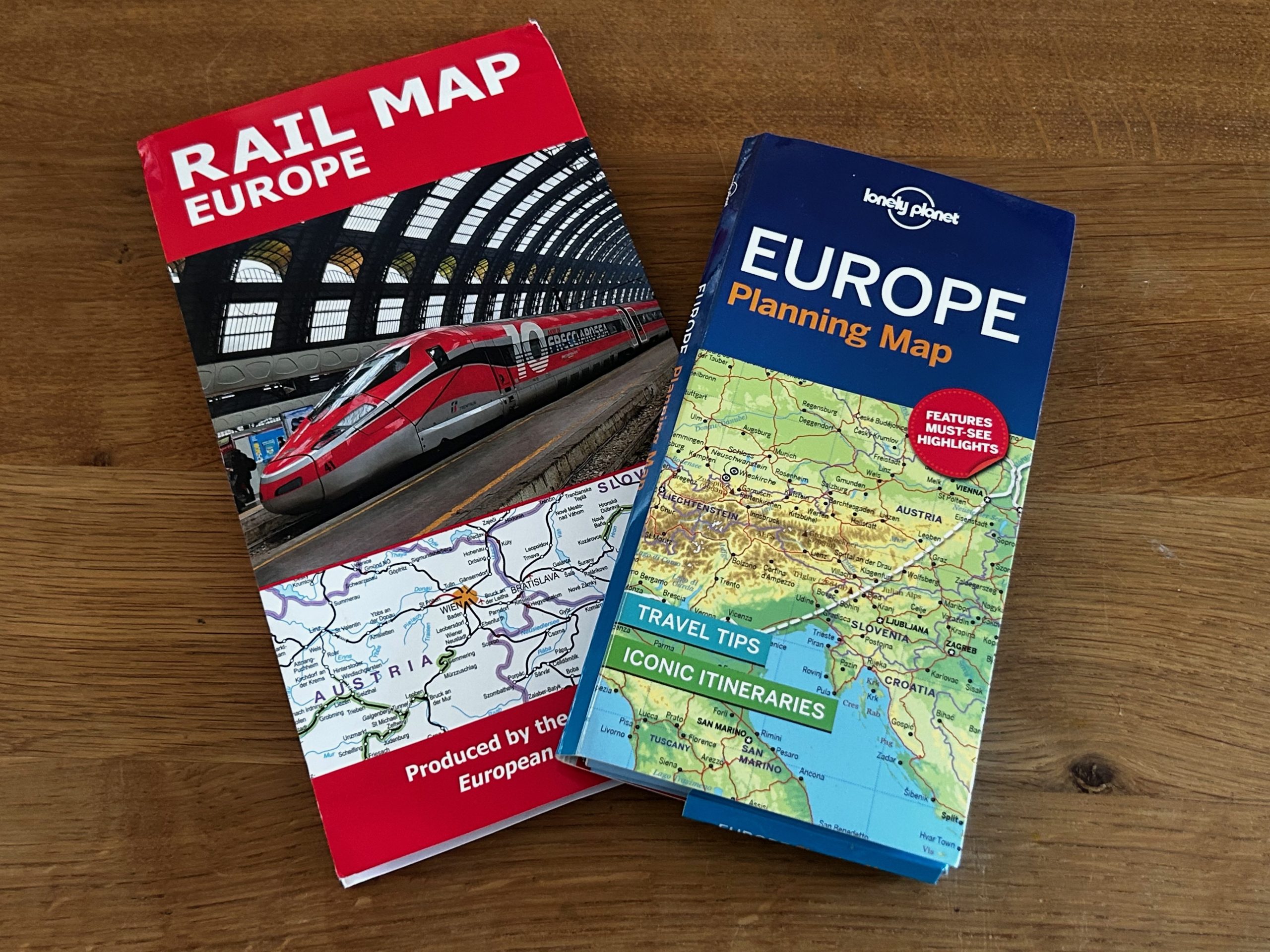
A pictures showing two maps laid closed on a wooden table. On the left is the Rail Map Europe. On the right the Lonely Planet Europe Planning Map.

The first was one published by the European Rail Timetable which shows all the routes across Europe. It helped us to see where tracks went so that we could make decisions about where to go between and estimate how many steps we night need to go to our end goal location. Whilst this was great for the tramlines I felt I wanted a bit more in terms of understanding the lay of the land. I therefore also purchased this Lonely Planet map of Europe which shows you where the mountain ranges are, gives some suggestions of what you could see in different places and even some suggested itineraries. There are even stickers so you can plot your planned route on the map itself. Not something we used, but I can see how it might be a good way of showing children where you’re off to.

These two maps got a lot of use when we planned our trip. Spread out over the kitchen table they allowed us to really see where places where and be inspired to follow train lines and see where we could end up on them. If it hadn’t been a chance conversation about how close we were going to be to the border or the Czech Republic with our planned route we might not have popped over and see the city of Brno, which turned out to be one of the highlights of our trip!

Last thoughts

It can be so easy to feel daunted about planning an interrail trip, and I do feel that planning is necessary, especially if travelling with children as we were, but once you’ve taken the first step of buying a pass there is so much information and help out there that the planning really is part of the fun. Feel free to ask questions of anyone you know who has been interrailing, and I too am happy to try and help.

Disclaimer: This post contains some affiliate links. If you click through on the links and make a purchase I will receive a referral fee. Doing so will not cost you any more than if you had gone there under your own steam. Thank you for any purchases you do make. Your support is very much appreciated.

Filed Under: Europe, Train Travel

Day trip to Dunkirk

August 17, 2025 by Penny Leave a Comment

It all started with an Instagram ad. One of those ones that pops up between stories and is usually getting you to improve your life in some way, or offering you something that seems too good to be true. That was my initial thought when I saw that DFDS were offering day trips over to Dunkirk for just £25.

A banner celebrating 25 years of the Dover to Dunkirk DFDS ferry route

I assumed that there would be no tickets left. That it would be £25 per person. That there would be a catch of some kind. But there wasn’t. To celebrate 25 years of their route between Dover and Dunkirk they were offering £25 day return tickets for a car and passengers in the month of March. Amazingly there were tickets available to go on a Sunday in just a week and a half’s time. At this point my husband was in the loo so I didn’t even bother checking with him before I started booking. I got half way through entering the car details and then I found the catch…

Two weeks earlier we’d sent off his passport to be renewed. His ten years were very nearly up and there was the chance that he was going to need to go to Germany with work soon and, as we had no other trips planned, we thought it would be a good time to get it done before the Easter holidays. But then they rejected his photo (seems our white shower curtain background was too textured) and we hadn’t got round to sending in a new one. The passport office had been sent his old passport though, so even though it would be valid for travel he didn’t have it and therefore couldn’t technically travel.

After an hour or so of feeling deflated and annoyed that I’d found an amazing offer but couldn’t make the most of it I decided not to let admin stand in my way. After all, I can’t even get a day return on the train for the whole family into London from where I live for £25, let alone being able to take us all to France for the day. I went ahead and booked the ferry tickets and then found a huge sheet of white card and took new passport photos for my husband and submitted them in the hope that he’d have a new passport before it was time for us to head to Dover. If his passport wasn’t there in time we’d only lose £25.

The good news was that the passport arrived on the Thursday (thanks Passport office!) and so on the Sunday we headed off bright and early for Dover and our trip to France. The youngest in the back of the car stupidly excited that she was off to another country for the day and would be back in time for school the next morning.

Dunkirk or Calais?

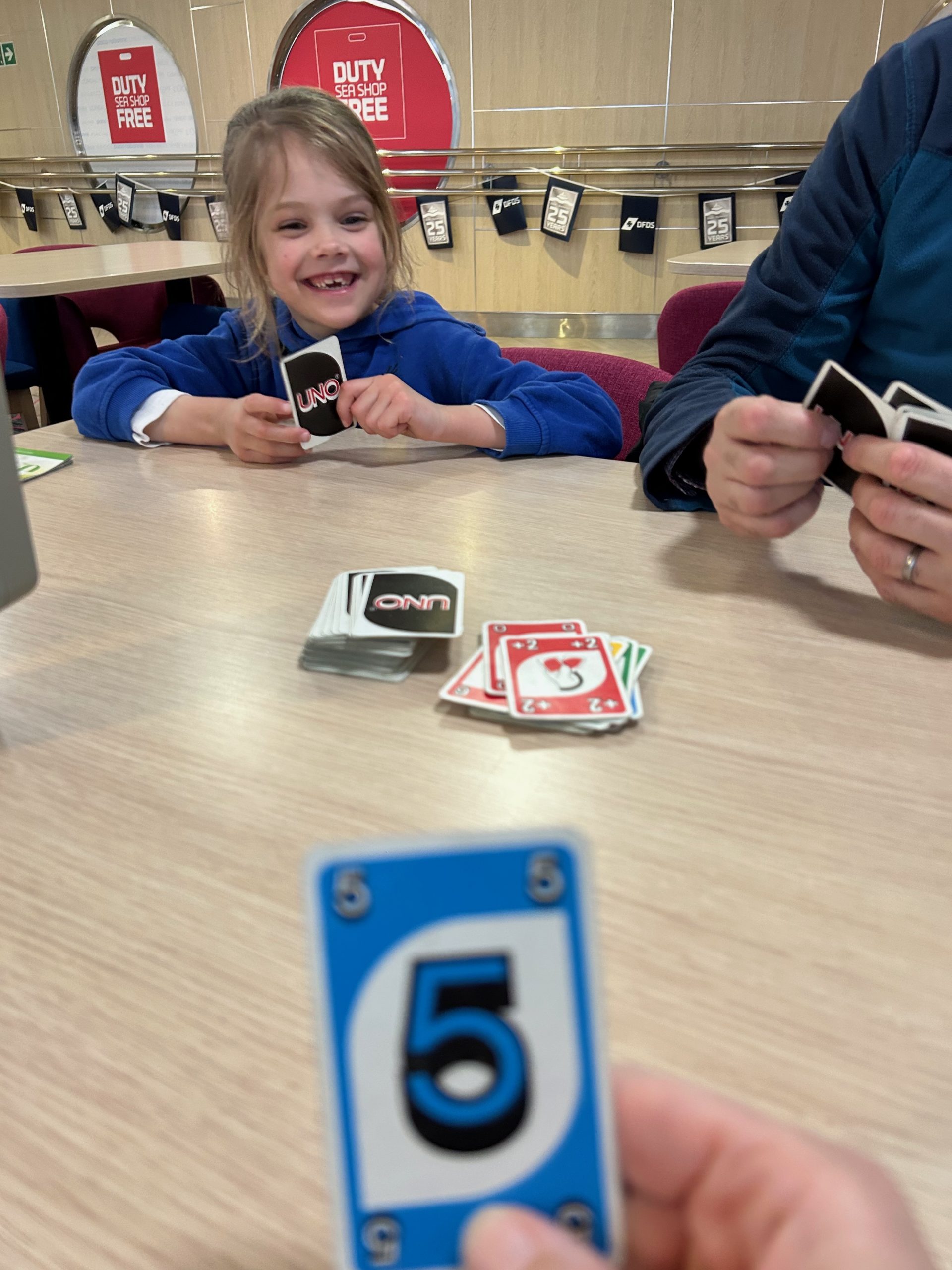
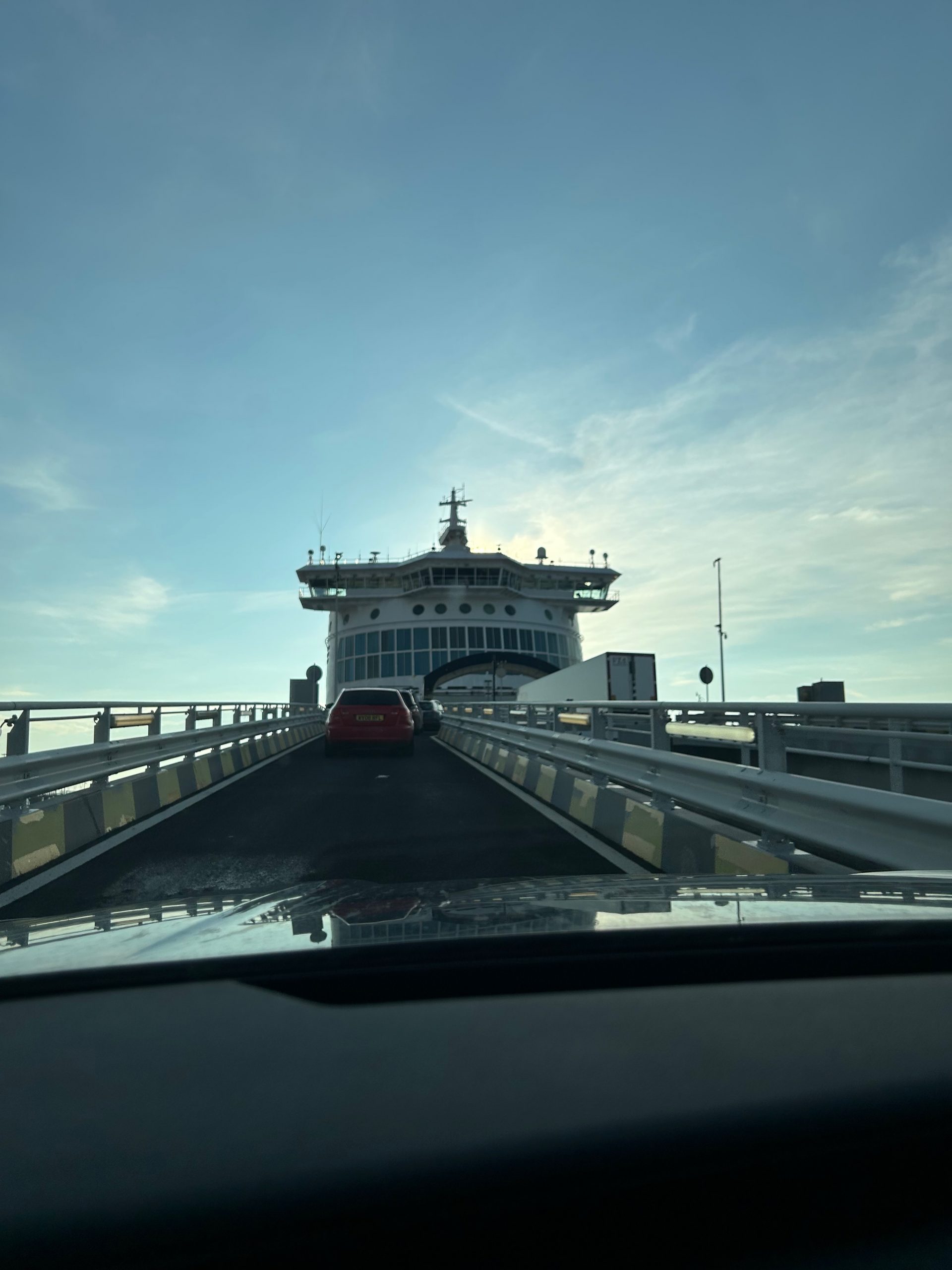
It’s a couple of hours from where we live to Dover and we’d done the trip a few months earlier to head over to Calais and the Opal Coast area of France, so we knew the drill quite well and where we might get held up en route. We left plenty of time and didn’t need our contingency. So much so that when we arrived at Dover and checked in the guy in the little booth said that there was space on the earlier sailing to Calais if we wanted to take it. Now that ferry was leaving a whole hour and twenty minutes earlier than ours, and the crossing is 30 minutes shorter than that to Dunkirk. We instantly decided to take it and drove aboard. Within 20 minutes we were pulling out of Dover feeling pretty chuffed with ourselves and starting the first Uno game of the day.

That’s the advantage of sailing with DFDS over Irish Ferries and P&O who also cover the Dover – Calais route. DFDS have the two routes and so if you manage to check in early and they have space they will often offer you a space on an earlier sailing to the other port.

It’s only an hour and a half to Calais and from there a 30-40 minute drive to Dunkirk so we knew that we had some time in hand so actually pulled over in Calais and enjoyed our sandwiches next to the beach watching the ferries roll in to the port of Calais. We’ve also discovered a place on the beach that sells incredibly cheap ice creams that we now have to take advantage of every time we’re passing!

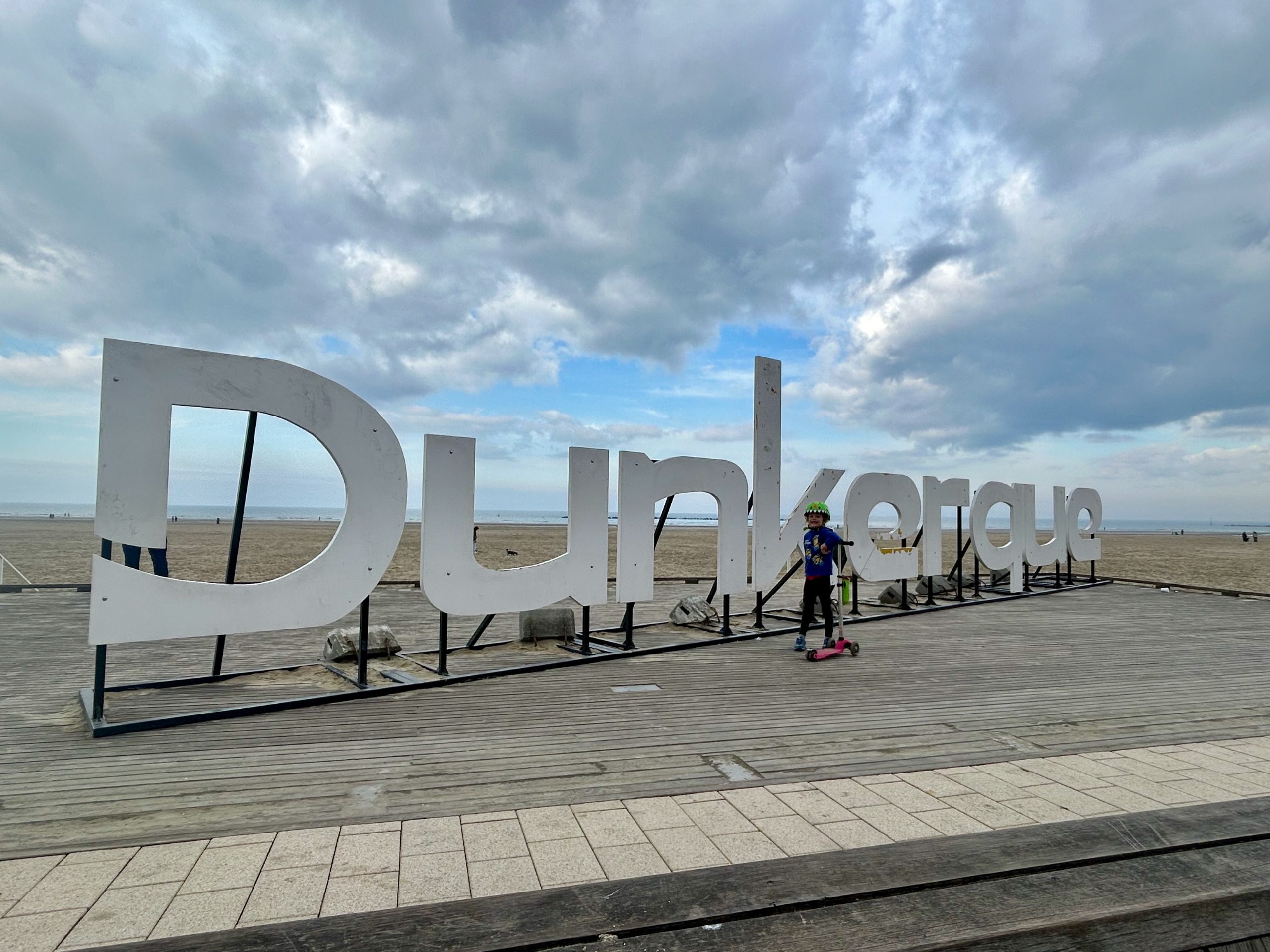
Having spent some time exploring Calais a few months earlier (and knowing that we were returning in just a matter of weeks on our way to another trip to the Netherlands) we pressed on to Dunkirk in the car. It was only 40 minutes from the beach in Calais to get there and we were thrilled to find space in a free car park near the beach.

WW2 and Operation Dynamo in Dunkirk

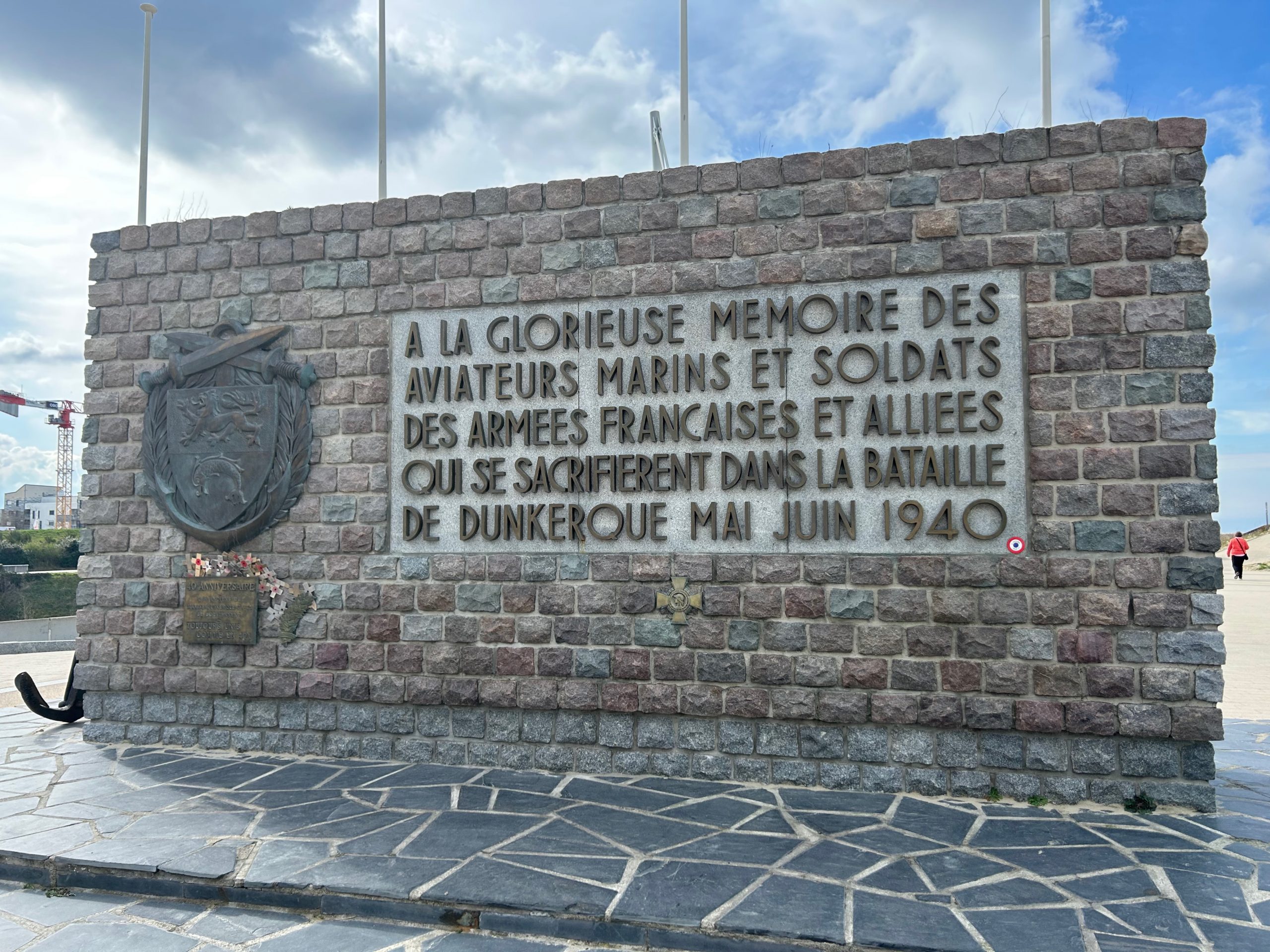
Now for me the main attraction of visiting Dunkirk was to see the beaches where Operation Dynamo had taken place during the Second World War. I had spent a term working in a Year 6 class where they had been studying WW2 and Operation Dynamo in particular. I remembered my parents saying that they had visited Dunkirk many years ago and my mum was actually quite disappointed that there wasn’t more there marking what had happened. She’d managed to find one memorial that the local tourist office had pointed her towards and that was it.

Since then though Holywood had been to Dunkirk in the form of the Christopher Nolan film and as a result it seems that money had been directed into marking what had happened there more for tourists visiting the area. Our previous trip down the Opal Coast had shown us that there was a definite interest in the Second World War in the area with several small museums along the coastline and lots of tourists heading for them. In Dunkirk there were several display boards along the beach with pictures from the evacuation and text in English and French explaining what had happened. I get the impression that these had been paid for with money from the film.

It was also evident to us that money was being directed into the beach area to attract tourists more generally. As well as new apartment blocks and cafes and restaurants there was also a sparkling looking Hotel and Spa from Radisson Blu right next to the beach which looked like a lovely place to stay.

For our daughter the history side of things was secondary to being in a different country for her lunch and she was equally thrilled that we’d thrown her scooter in the back of the car, as it meant she was able to scoot along the seafront to her heart’s content whilst we took in some of the history.

With the trip planned so quickly and a busy time at work meaning we hadn’t done much prep we were also delighted to find that there was now a museum all about Operation Dynamo close by and, although we didn’t have time that day to go, we made a mental note to return and visit.

Before we knew it we were jumping back in the car and heading to the port in Dunkirk for our ferry home. It is worth noting though that the port in Dunkirk is to the south of the town, towards Calais, so really there isn’t all that much difference in overall time when you compare sailing to Calais and driving up the coast. Especially so when you think about the ferry taking an extra 30 minutes to get to Dunkirk.

After a little bit of a problem at passport control (when the French officers forgot to stamp me out of the country and instead stamped my husband’s new passport out twice!) we managed to get the UK Border Force to help us make sure I was officially and legally out of France before we boarded the ferry home.

The ease and calmness of ferry travel

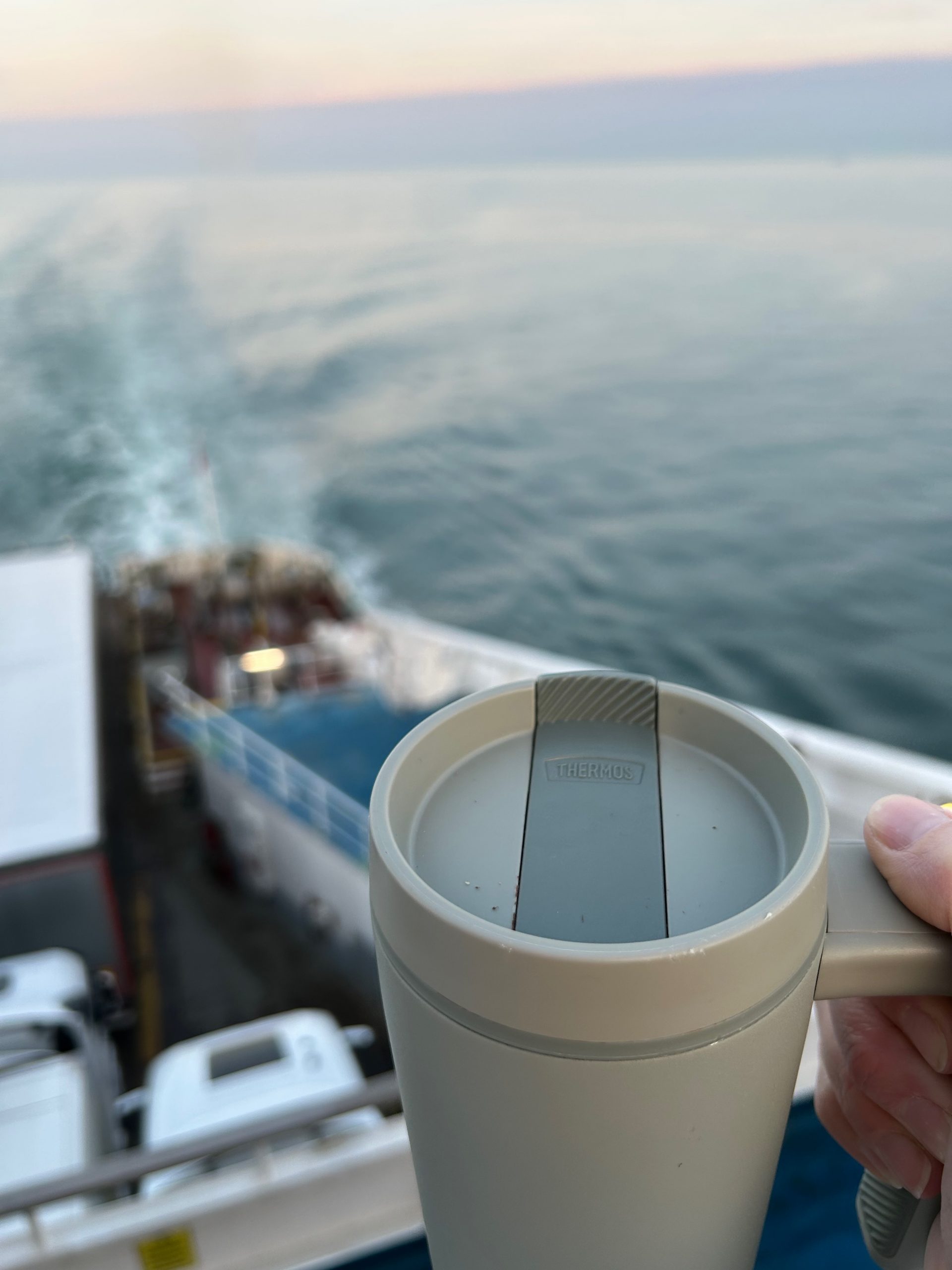
The two hour sailing was a breeze and I have to admit to being a huge fan of the convenience and calmness of taking the ferry over to France rather than flying. Just being able to sit on deck with a cup of tea and take in the sea air is a huge positive for me rather than being cramped in a plane. Yes the meal on the ferry home did cost more than the return ferry tickets, but overall it was still far cheaper than a day trip to London and a meal out there.

I said we’d return and take in the museum there, but it was only when we then visited my mum at Easter and told her about the trip and she said the words “oh I wouldn’t mind returning to Dunkirk for the day” that we put another plan in action. It just goes to show that Extreme Day Trips don’t only involve flying!

Filed Under: Family Days Out, France, Sea Travel Tagged With: Calais, day trip, DFDS, Dover, Dunkirk, Extreme Day Trip, ferry, ferry travel, Operation Dynamo

Exeter’s Underground Passages

June 10, 2024 by Penny Leave a Comment

Shoppers and tourists wander round the city of Exeter many admire the cathedral, the historic Roman wall and the Quayside whilst also making the most of the shops and restaurants. What many of them don’t realise though is what is under their feet. The city has a secret that lies beneath the streets in the form of Exeter’s Underground Passages.

When do the underground passages date from?

The oldest of Exeter’s Underground Passages are believed to date from the 14th and 15th centuries. In addition to the stone Medieval passages are some dating from the Georgian period, which are instead made of brick. It is thought that tours of the passages have been taking place since the 1930s.

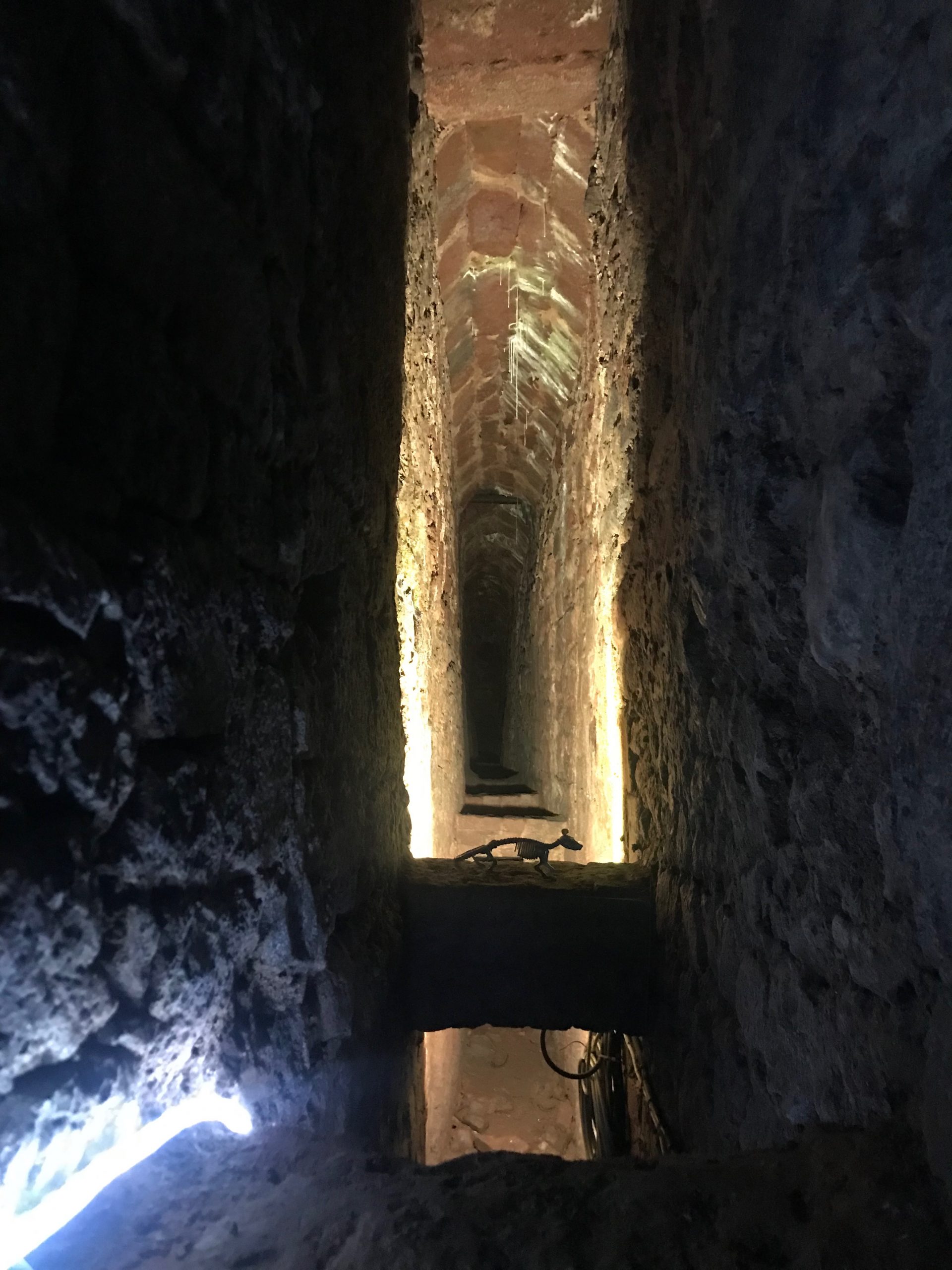
A view into a lit up section of the tunnels showing a narrow passageway, but a high ceiling. In the foreground on a horizontal bit of stone across the tunnel is the skeleton of what I suspect is a rat.

Why were the underground passaged built?

The medieval passages were built as part of the work to bring a clean drinking water supply to the city of Exeter. Pipes brought water from nearby springs into the city, but as they realised that pipes often sprang leaks and would need repairing this could be problematic if they had to keep digging up the streets, or properties. Therefore it was decided that the pipes would run in a series of underground passages beneath the city. If a repair was needed plumb res, or their apprentice boys, would descend into the passages and fix it, without any need to disturb what was going on in the city’s streets.

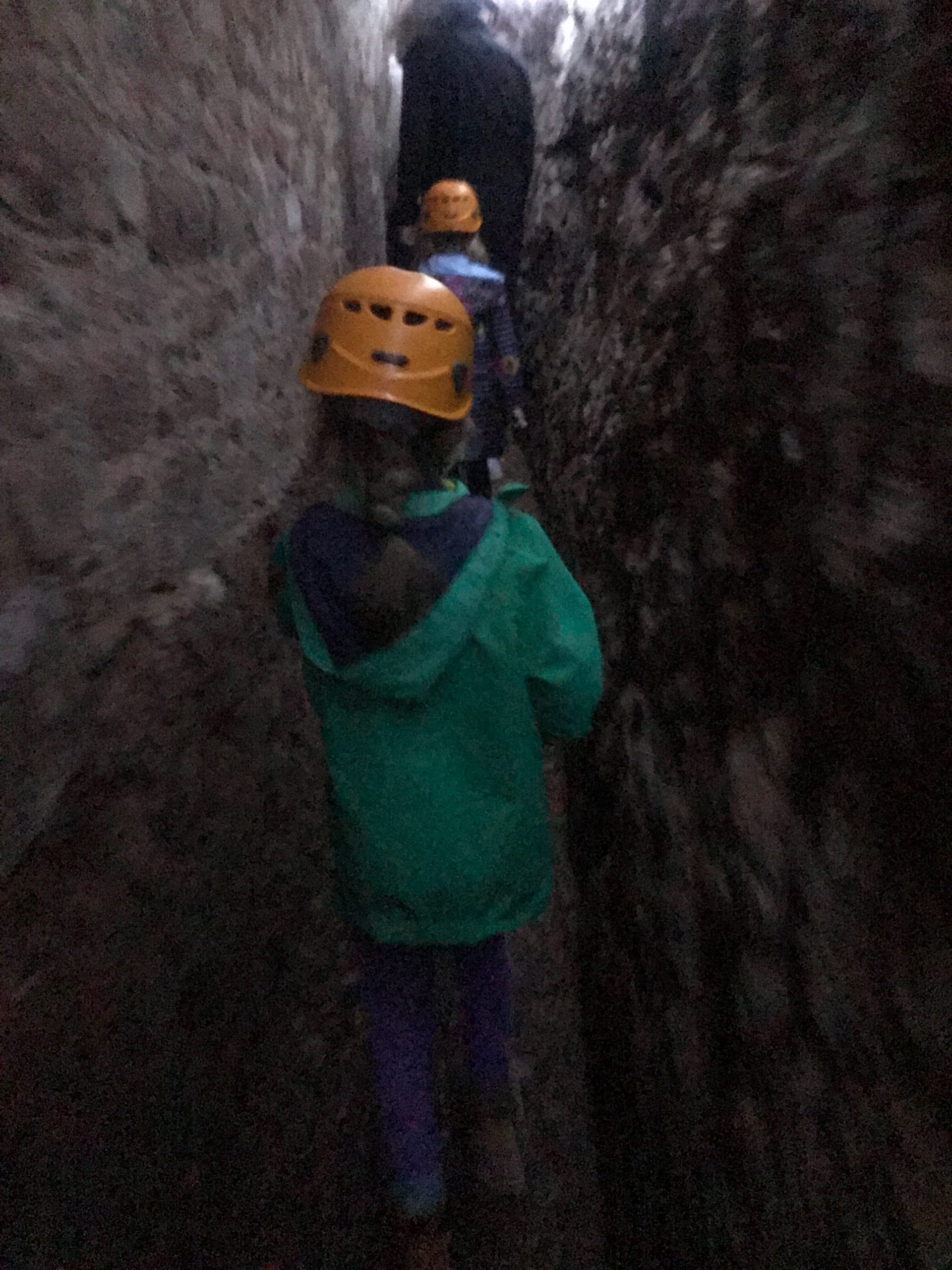
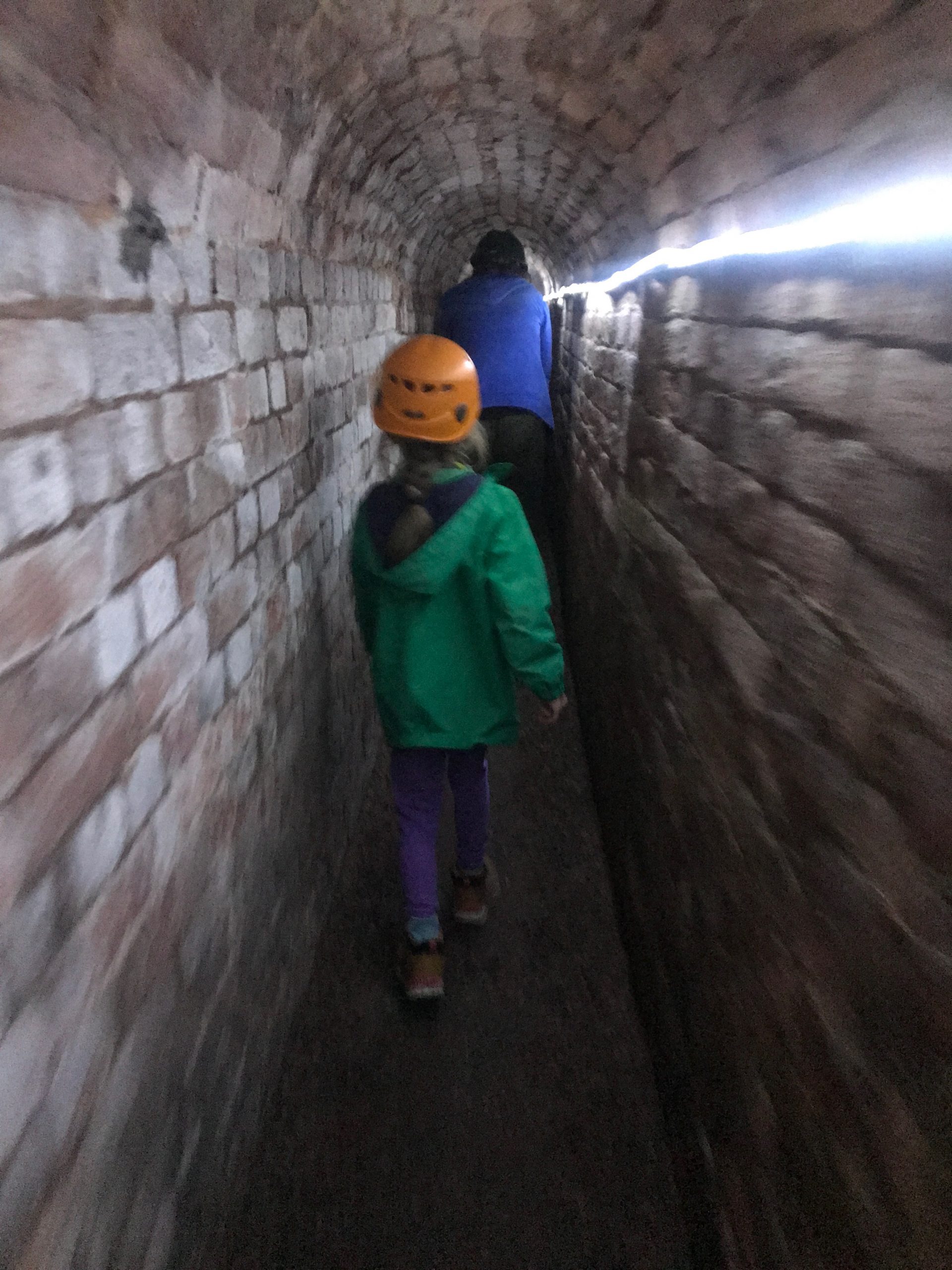
A slightly blurred photo taken in Exeter's Underground Passages showing the back of a small girl wearing a green coat and orange hard hat walking through a stone tunnel. In front of her is someone in a blue coat and orange hat.

There still remains a network of these underground passages beneath the city, although in some places they are blocked up to allow for more modern buildings and things like a bank’s underground safe!

How can you visit Exeter’s Underground Passages?

Exeter City Council own and run the tunnels and the associated visitor centre. They run tours that run Thursday to Sunday, 11am to 4pm. Booking is advised (on the day we went they were all fully booked in advance) and can be done online here. The whole experience lasts about an hour, with some time in the exhibition first, then a video telling you about the tunnels before you go on a guided tour which lasts about 25 minutes.

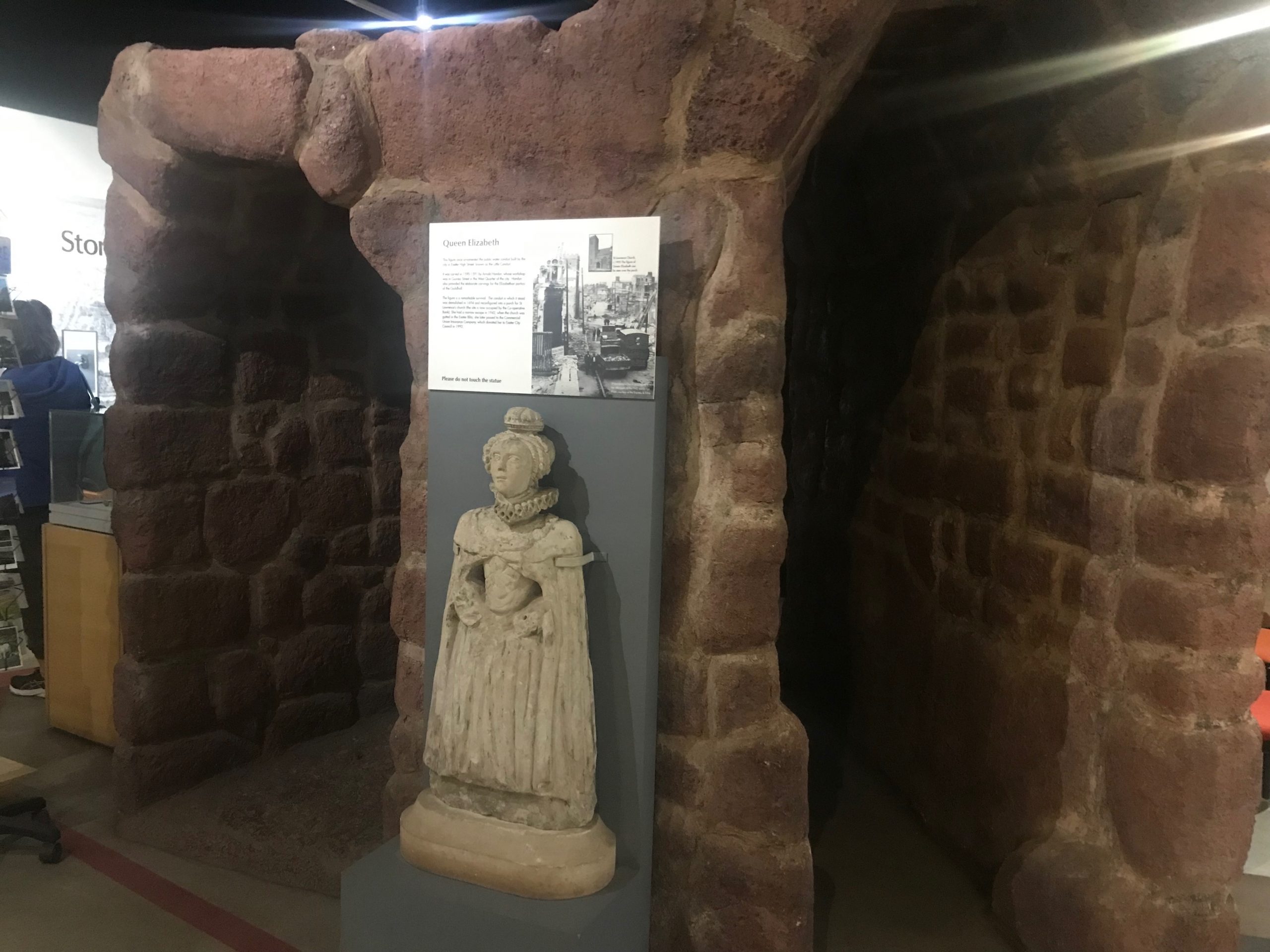
A reconstruction of some of the tunnels seen in the visitors centre.

What should you know before you go?

Firstly, under 5s are not permitted on tours. Having been down with a five year old I totally understand and agree with this decision. You are walking through cramped, narrow, damp tunnels, with limited head room. You can’t strap a baby to your front or back safely down there and definitely wouldn’t take a pushchair with you!

As I’ve already said, the tunnels are narrow and cramped. Being underground and designed to carry water pipes they are damp in places and there can be puddles underfoot. Wrap up warm, wear sturdy footwear and don’t wear clothes that you’d be upset if they got dirty. When you go in there are free lockers to leave all bags in and you will be given hard hats. There are hard hats for children too. The tunnels are low in places and I was very grateful for the hat as it’s hard not to bump your head a bit as an adult down there.

If you get claustrophobic then this is not the tourist attraction for you.

How much does it cost to visit Exeter’s Underground Passages?

At the time of writing (June 2024) ticket prices were as follows:

  • Adult – £7.50
  • Child – £5.00
  • Concession – £6.00
  • Family (up to 2 adults and 3 children) – £22.00

What did we think about Exeter’s underground passages?

My five year old and I really enjoyed our trip under Exeter. I found the history of the tunnels fascinating, and they weren’t at all what I expected them to be like, so I enjoyed seeing the reality of what lies beneath Exeter’s streets.

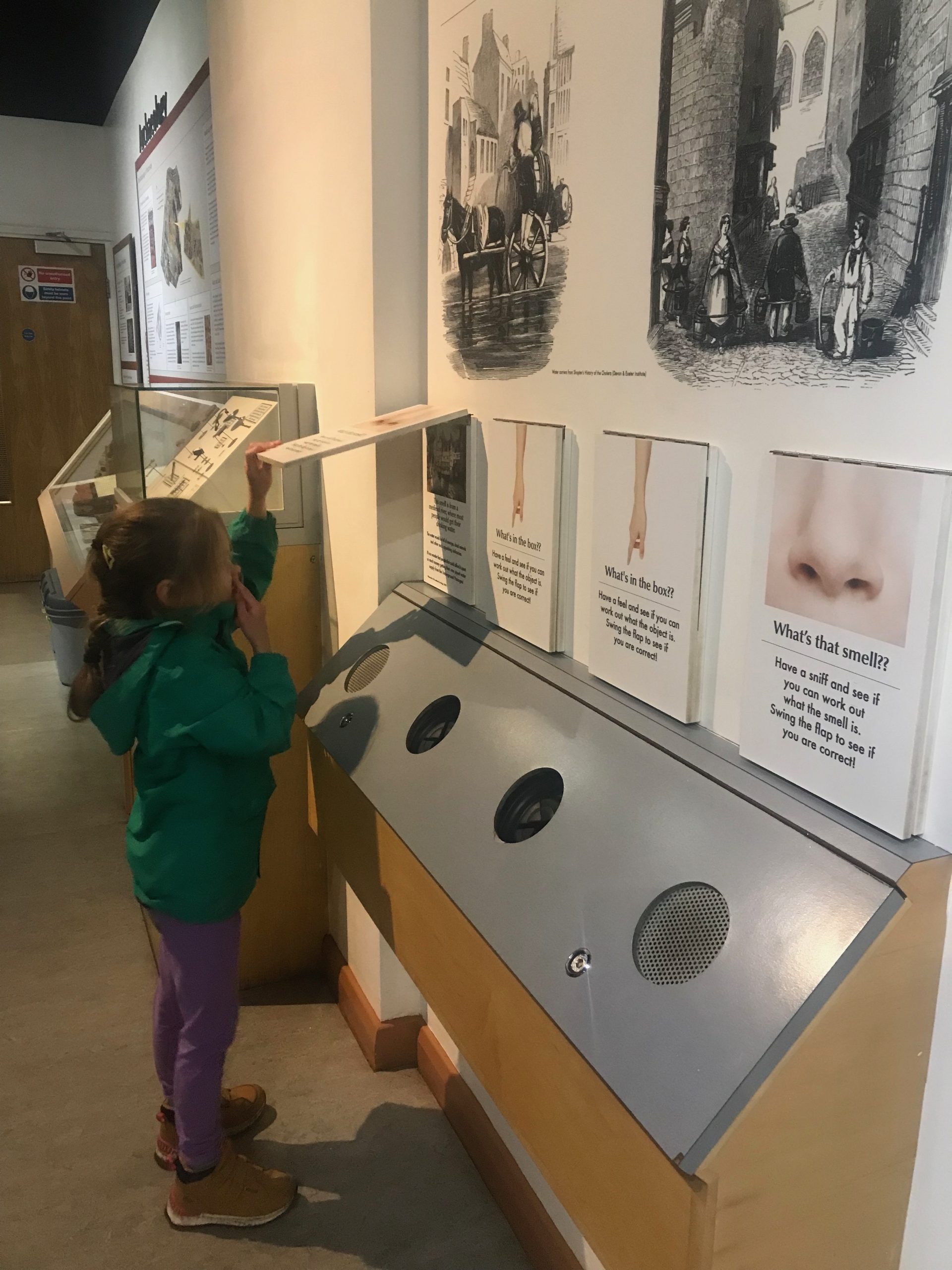
A five year old girl wearing a green coat holds her nose whilst lifting up a large flat to reveal what the smell is in the Exeter Underground Passages exhibition.

My daughter enjoyed the tour, but obviously at that age, didn’t take in all the history. She understood that they were for water pipes and the tour guide explained to her and other children on the tour about how children their age would be paid to go down into the tunnels with a cloth soaked in animal fat to fix pipes. This helped her understand exactly what it was that we were seeing and she obviously was quite excited to put on a hard hat and venture somewhere new and different.

The same young girl in green coat and orange hat walks through a brick section of the tunnel. On the righthand side you can see a light rope along the tunnel wall. The photo is slightly blurred, but you can make out the adult in the tunnel infant of the girl who is having to stop slightly due to the low roof.

For much of the tour you are walking in single file down the tunnels and so you can’t always see the tour guide with you. Ours made a great effort to make sure all of us could hear what she was telling us though, but it helps that the groups are relatively small. The tunnels are well lit with an LED light string leading all the way round, but it is tricky to try and take an photos down there as you don’t stay still for long, and when you do it is more to listen than to see anything.

The Underground passages are certainly a unique experience that is well worth booking on to if you’re in Exeter.

Filed Under: Devon

Marine Discovery Centre Whitby – AKA The Lobster Hatchery

May 9, 2024 by Penny Leave a Comment

Our visit to Whitby coincided with grey skies and pretty much constant heavy drizzle, so after parking the car our first stop was the local Tourist Information Centre to ask what was recommended for bad weather. The local Captain Cook Museum as apparently closed and so instead they suggested the Marine Discovery Centre, which locally is known as the Lobster Hatchery. It is also Whitby’s only aquarium.

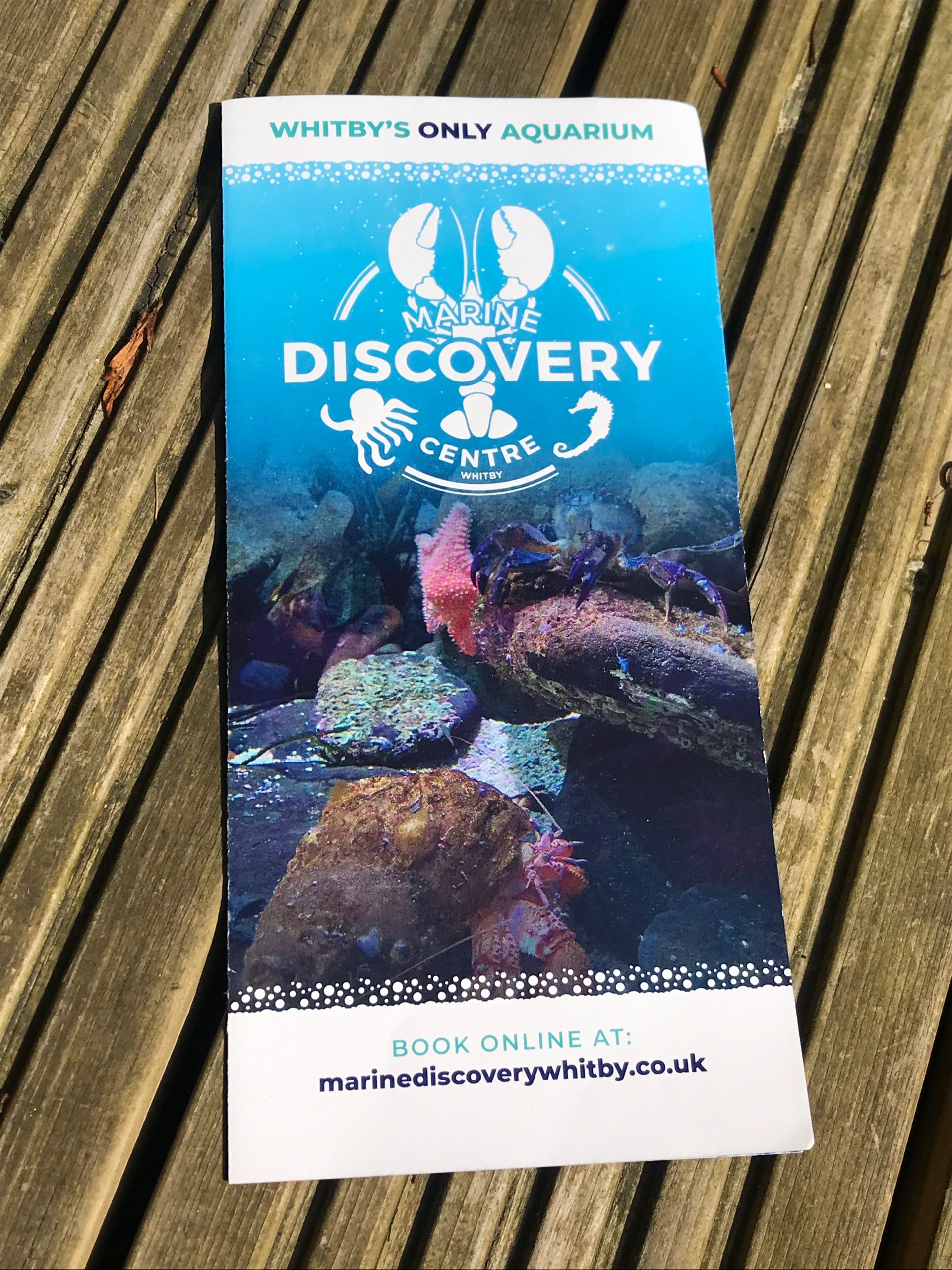
A visitor leaflet for the Marine Discovery Centre Whitby. At the top of the leaflet it says Whitby's Only Aquarium and their website URL is at the bottom with a statement saying "book online at:"

Lobsters and Whitby

Whilst I’d say I was familiar with lobsters I have to admit that I don’t know very much about them. What I certainly wasn’t aware of was that Yorkshire Lobsters are the most sought after and expensive in the world! An average of 100,000 lobsters are landed each year by Whitby vessels and the town is the third largest lobster fishery in Europe, behind nearby Scarborough and Bridlington. Yorkshire is basically the lobster capital of Europe. And a mighty fine county for a million and one other reasons too!

The plight of lobsters in the wild

In the wild only 1 in 20,000 lobsters make it from egg to juvenile. That is not a very high success rate. The Marine Discovery Centre Whitby is able to boost that up to 50% in their lobster hatchery. They take eggs from female lobsters and keep them in the hatchery through the larvae stage into them being juveniles, until they are big enough to be released into wild populations. They aim to release 100,000 every year. That’s the same number that are landed by local Whitby vessels.

A blue looking lobster inside a large tank.

What’s at the Marine Discovery Centre, Whitby

I’m not going to lie, the Marine Discovery Centre, Whitby is a small place. Literally one room. There are a total of five tanks with starfish, hermit crabs, anemones and of course lobsters. At fist glance you can be a bit underwhelmed by what there is to see there, but once you read and understand about the work that the Whitby Lobster Hatchery (a marine conservation charity) does then you suddenly look at this place in a whole different light.

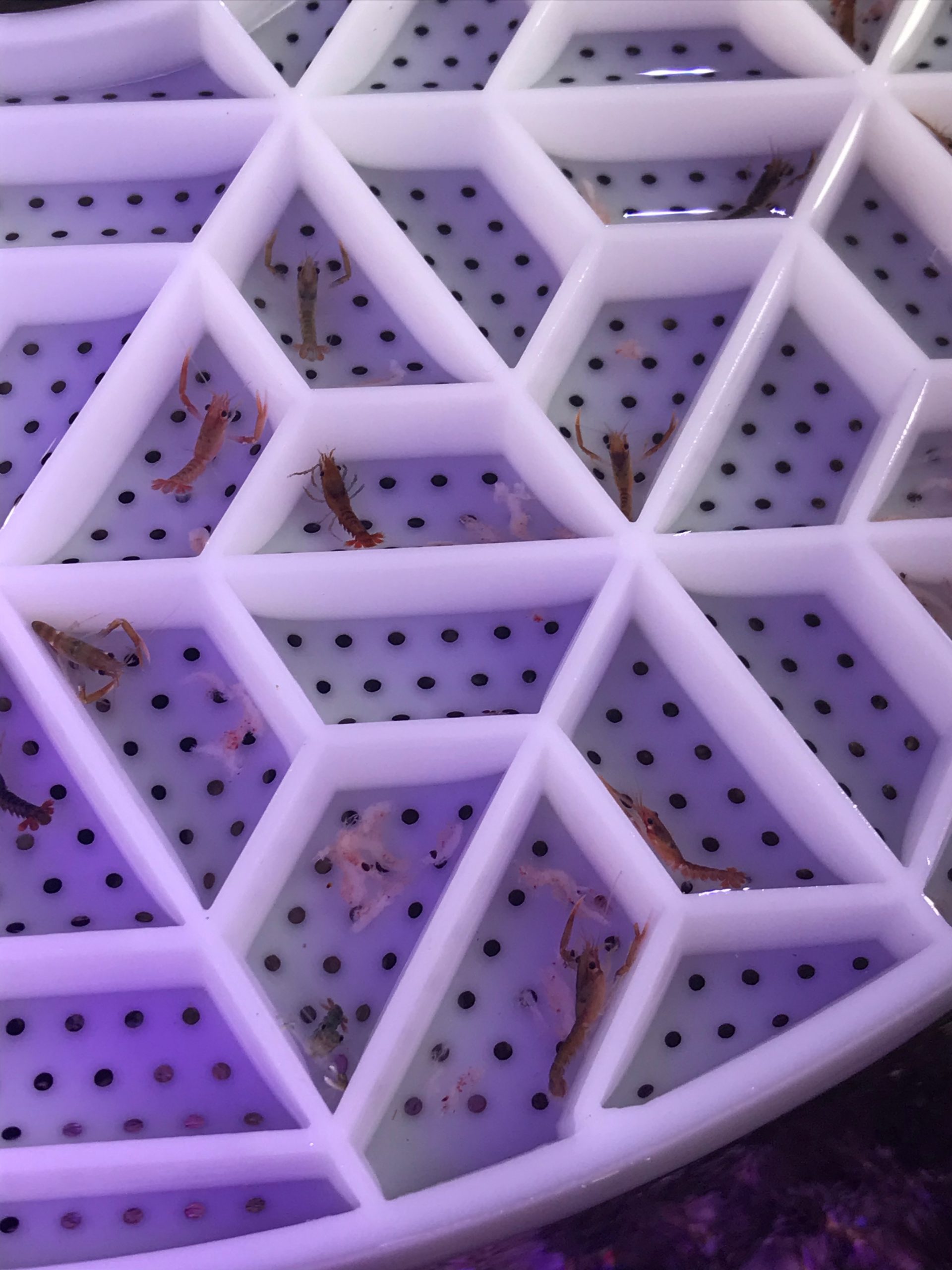
Small trapeze shaped cells in a white tray with holes in the bottom to allow water to rise up through them. In most of the cells is a juvenile lobster. You an clearly see their claws and they simply look like miniature versions of adult lobsters.

The tiny juvenile lobsters are utterly fascinating. It’s mesmerising to see them so small and so close, and wonderful to think about what they are doing there to rejuvenate the lobster population. I’ve been to aquariums around the world who are doing various bits of marine conservation work, but never before have I been anywhere focuses just on lobsters.

We went as a family with children varying in age from 5 to 13 and all really enjoyed it, as did the adults.

Visiting the Marine Discovery Centre and Lobster Hatchery

The Whitby Marine Discovery Centre is located on Pier Road on Whitby, almost opposite the famous Magpie Cafe. It’s about a ten minute walk from the train station in the town, and near there are numerous large council car parks.

It is normally open Thursday – Sunday, 10am to 5.30pm, but they do say that they open different hours in the school holidays. Their website actually says they are open to 6pm so if you’re planning a visit it may be wise to contact them first to confirm times.

At the time of writing admission prices are as follows: Adults £5, Children £4, Family £15 (2 adults & 2 children or 1 adult and 3 children), Concessions £4. You can book in advance via their website, but you don’t have to. We bought tickets when we arrived.

Upon arrival there’s just a terminal on the wall that you can purchase tickets from, and then you simply scan a code on your ticket to open the gate to get in. There were a couple of staff around to answer questions, but it’s quite a hands off place to visit.

There’s a small gift shop with some lovely bits produced from recycled products and all sold to support the work of the Whitby Lobster Hatchery. My husband picked up a cord for his reading glasses (were really showing our age now!) that was made from recycled fishing nets.

A five year old girl in a yellow coat sat at a small white table colouring in a picture of a fish.

There was also a table with some colouring for young children and my daughter really enjoyed sitting there colouring in some pictures whilst we continued to look at the tanks and information boards around her.

Whilst we were there I noticed a fellow visitor who was a wheelchair user. The centre is all on one level and appears to have been designed with accessibility in mind.

Marine Discovery Centre Whitby – what we thought

A small, but perfectly formed little aquarium that is supporting and education people on the excellent work being undertaken by conservationists and marine biologists in the lobster hatchery. Perfect to visit with the whole family and a wonderful way to learn more about local marine life.

Looking for somewhere to eat nearby?

If you’re looking for food nearby then I highly recommend the Magpie Cafe across the road from the Marine Discovery Centre. Excellent food and great service in a family friendly cafe. Don’t let the queue put you off. It’s there because the food is excellent and staff are great at getting it moving as fast as they can.

Filed Under: North Yorkshire, Whitby

St Albans Clock Tower

April 26, 2024 by Penny Leave a Comment

Whilst St Albans Abbey dominates much of the skyline of the Hertfordshire medieval city the nearby Clock Tower is also very worth a visit. Said to be the oldest medieval town belfry in England, it is located at the end of Market Place in St Albans and can be visited at certain times in the year.

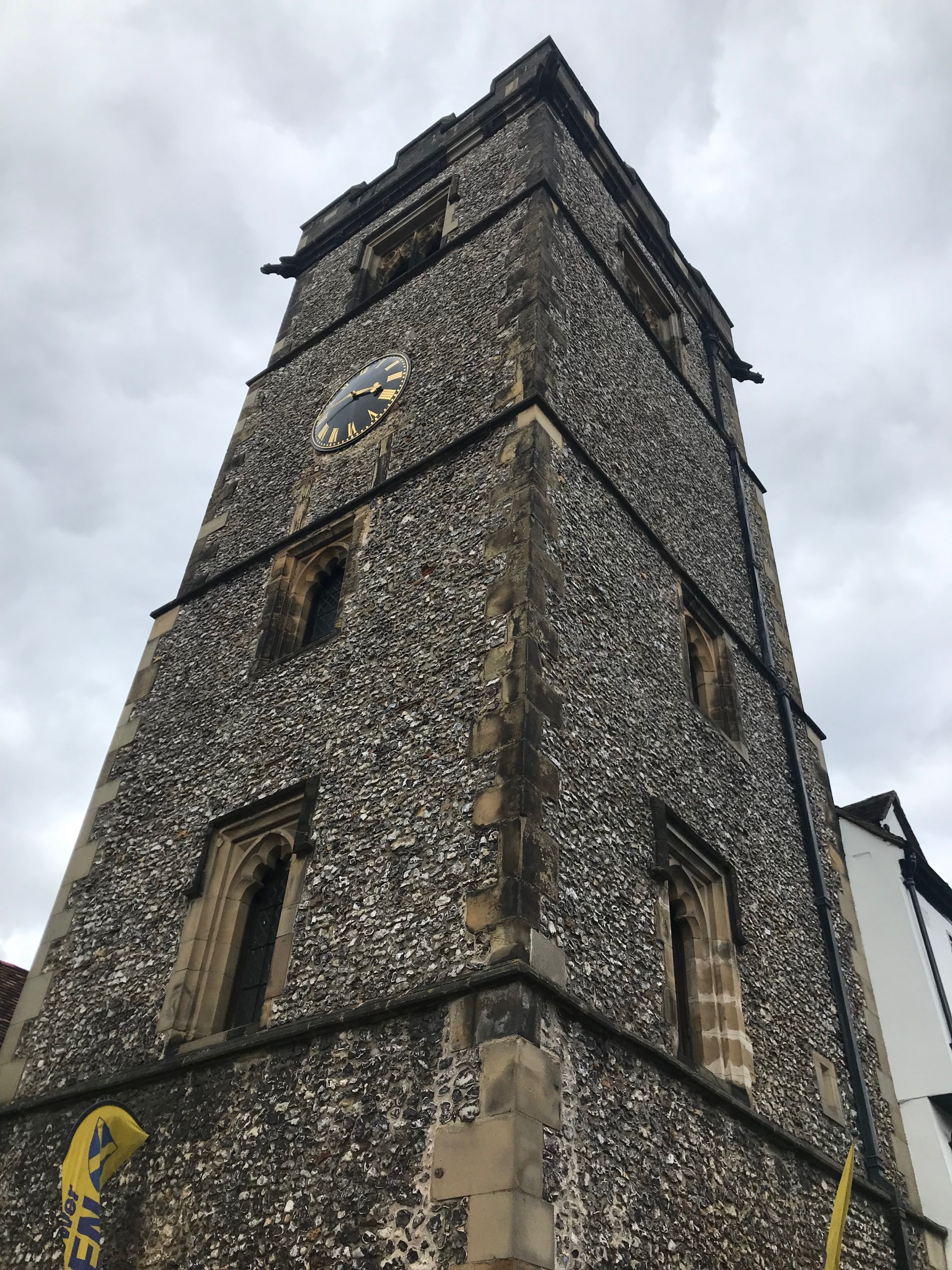
A view from the ground looking up at St Albans Clock Tower

The History of St Albans Clock Tower

Completed in 1405 and paid for by the people of St Albans, the Clock Tower was seen as a protest by the local people against the Abbey’s ability to regulate time-keeping in the town (as St Albans was at the time as it was not made a city until 1877).

The location of the clock tower is close to the site of the Eleanor Cross which stood in the town. In total there were twelve crosses erected between 1291 and 1294 to mark the nightly resting places of Eleanor or Castile’s (wife of King Edward I) funeral procession. The cross at St Albans cost £113 to build and was constructed in 1291, however the top section of the St Albans Eleanor Cross was destroyed during the English Civil War, and the rest of the monument was later demolished.

The Clock Tower’s Structure

The Clock Tower has a total of five stories, each being slightly smaller than the one below. The ground floor was originally a shop, with the shopkeeper living on the first floor.

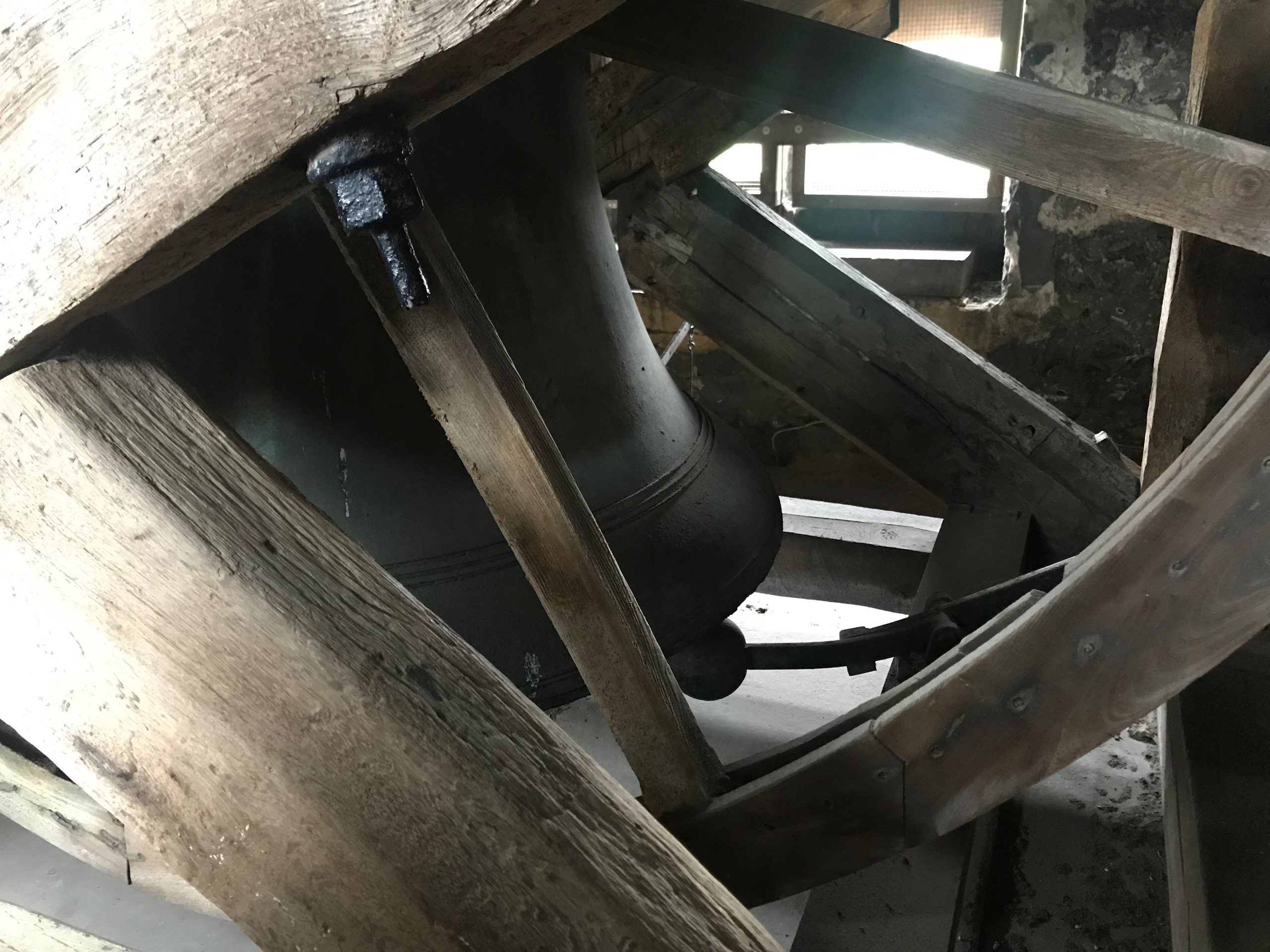
The large bell inside the clock tower

The second floor of the tower was the living quarters of the clock keepers with the third floor housing the clock and related mechanism. The fourth floor houses the bells. There are two bells in the tower. A large one, and a smaller market bell which was rung to signify the opening of St Albans market to people who were not freemen of the city.

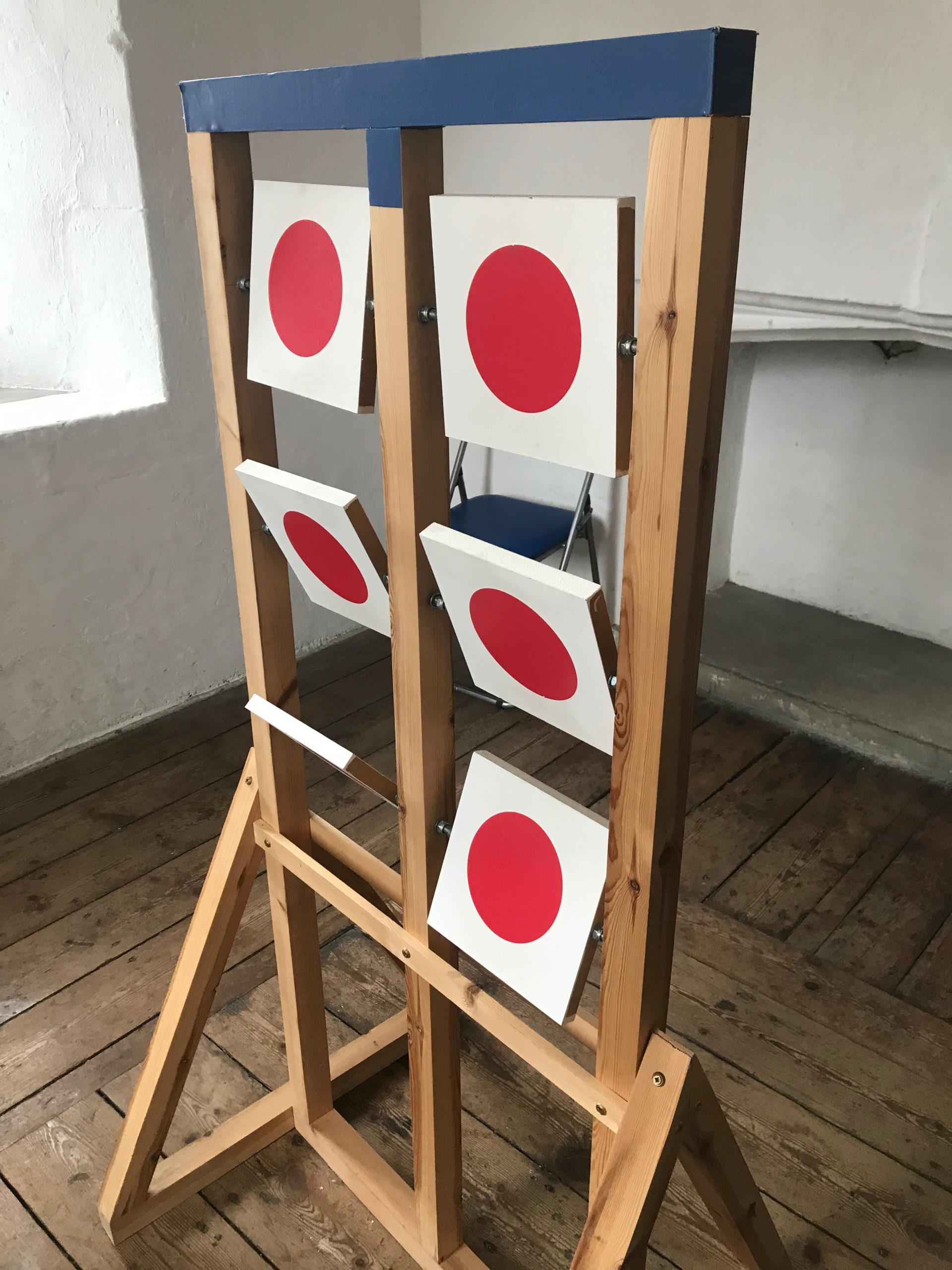
The St Albans Clock Tower as a Shutter Telegraph Station

During the Napoleonic Wars the Clock Tower’s height and location meant that it was used as a shutter telegraph station allowing semaphore messages to be sent between a total of 15 stations between London and Great Yarmouth in less than five minutes. A wooden hut was built on the roof of the tower, with the semaphore shutter equipment above it. This hut was removed in 1852.

An example of a shutter telegraph. A wooden from with six large white squares on it that are pivoted in their middles horizontally so they can be flipped. The squares are arranged two across and three down. On each white square is a large red circle.

The Clock Tower Today

St Albans Clock Tower is a well known local landmark in the city and features prominently in many pictures. At Christmas it is usually lit up beautifully with festive lights. The Clock Tower is under the care of St Albans City and District Council and is open to visitors at specific times.

Refurbishment of the clock means that this is now run electrically.

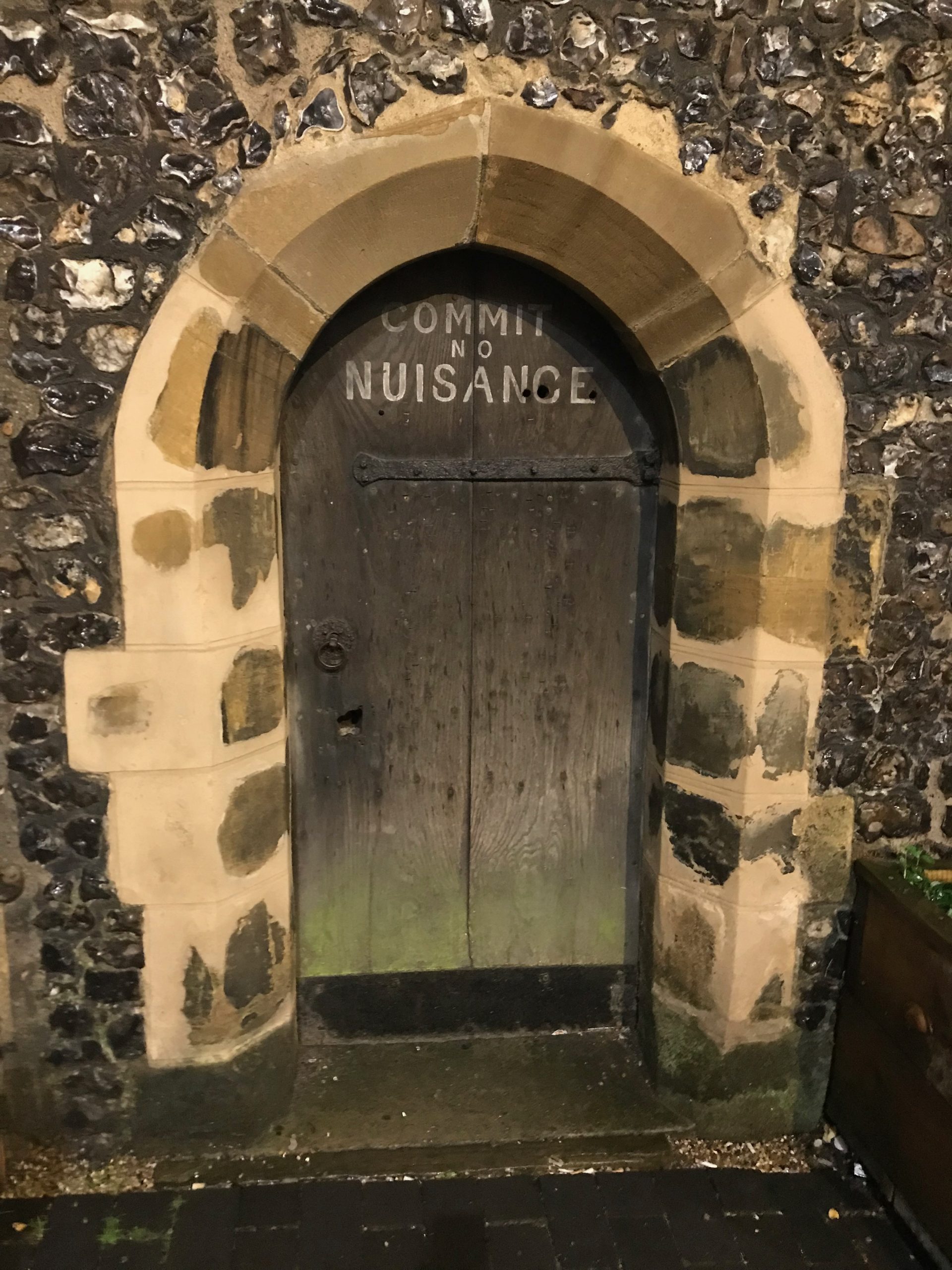
Commit No Nuisance

One other frequently photographed part of the clock tower is a door round the back with the words “Commit No Nuisance” carefully written at the top in white.

A wooden door set into the stone and flint tower with the words "Commit no nuisance" written on them at the top neatly in white paint.

This polite instruction was apparently written in 1915 and from a report of the St Albans Council’s Highways and Plans and Nuisances Sub-Committee (what a brilliant name!), dated 19 July 1915, it is recorded, ‘Attention has been called to the fact that nuisances are frequently committed by persons near the door on the west side of the Clock Tower, and urine finds its way under the doorway, and your Sub-Committee have given instructions for the step down to the door to be filled in with concrete and flaunced off to stop any liquid getting into the building and have directed that a warning notice should be put up on the door against committing nuisances.’

What an utterly bonkers but brilliant bit of history!

Visiting the St Albans Clock Tower

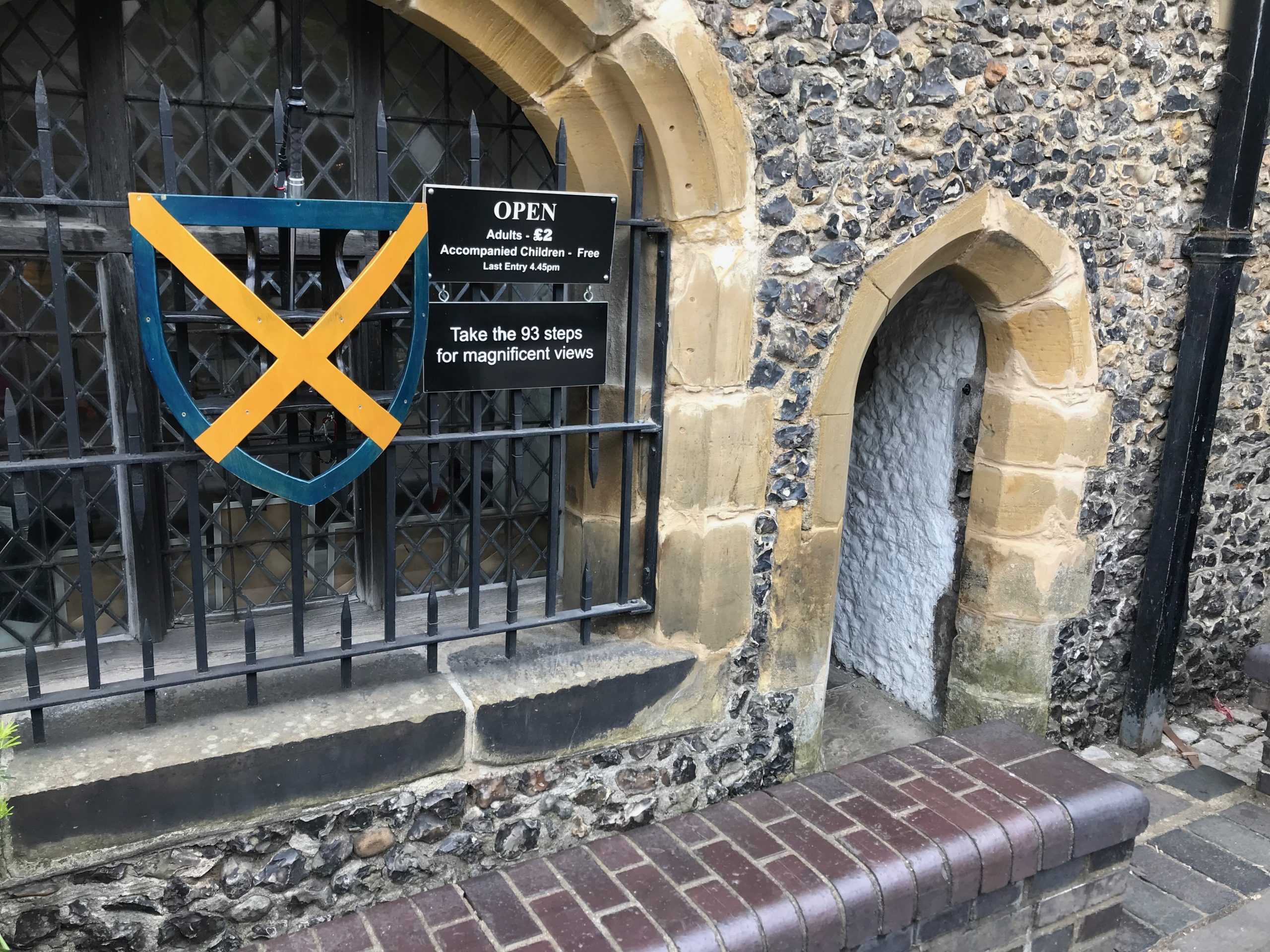
The Clock Tower is open to visitors every weekend and Bank Holiday from Good Friday through until late September. Visitors can arrive between 10.30am and 5pm. There is a charge of £2 for adult. Accompanies children are free of charge.

A small open doorway into a flint building. On teh railings are a large copy of the St Albans shield and a sign saying that you can climb the 93 steps to the top and what it costs.

In the shopkeeper’s quarters on the first floor of the tower is an example of a Shutter Telegraph system.

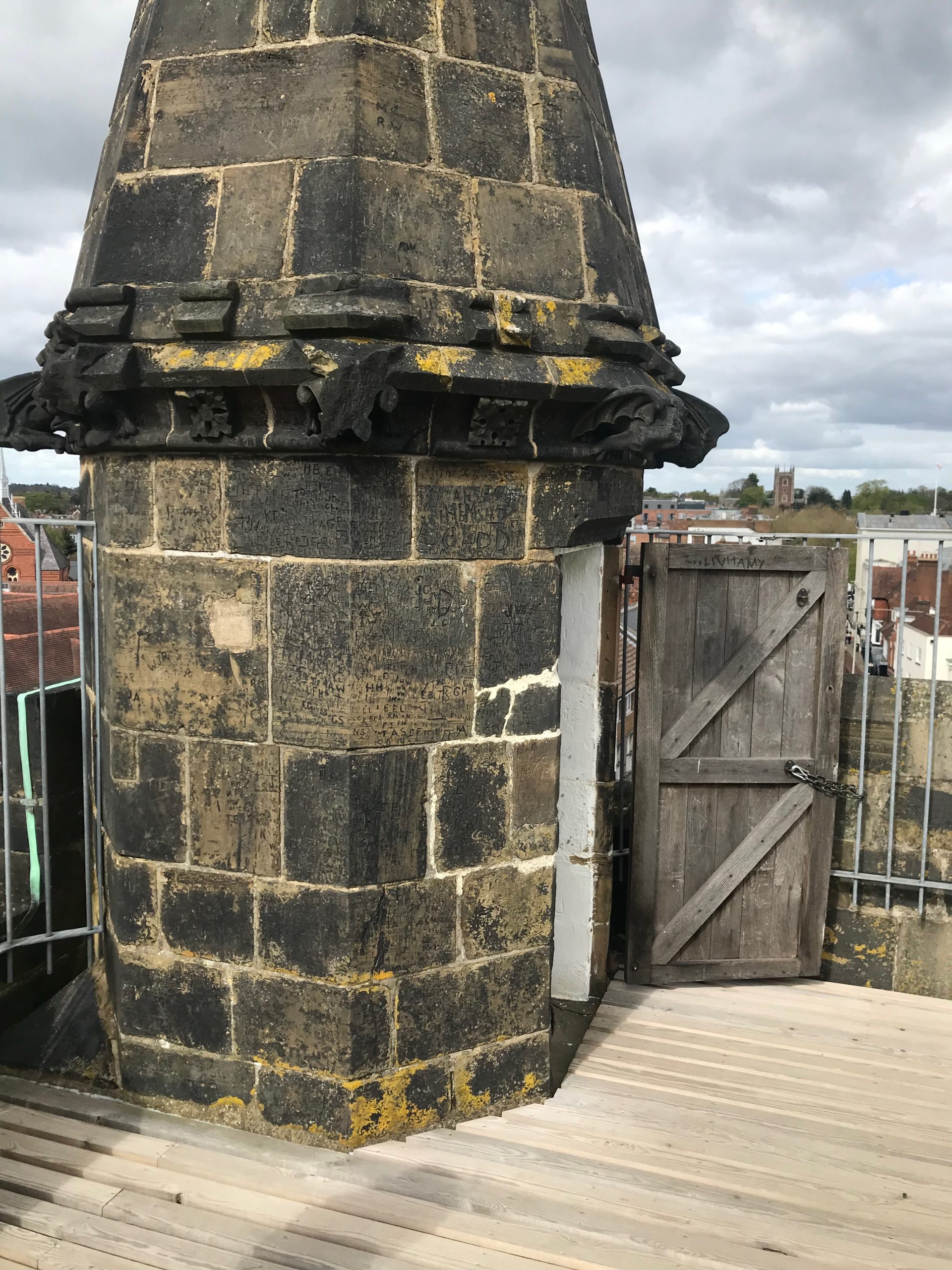
A view of a small stone turret on teh top of teh clock tower which is where you emerge from the stairs onto the roof.
Where you emerge from onto the roof of St Albans Clock Tower

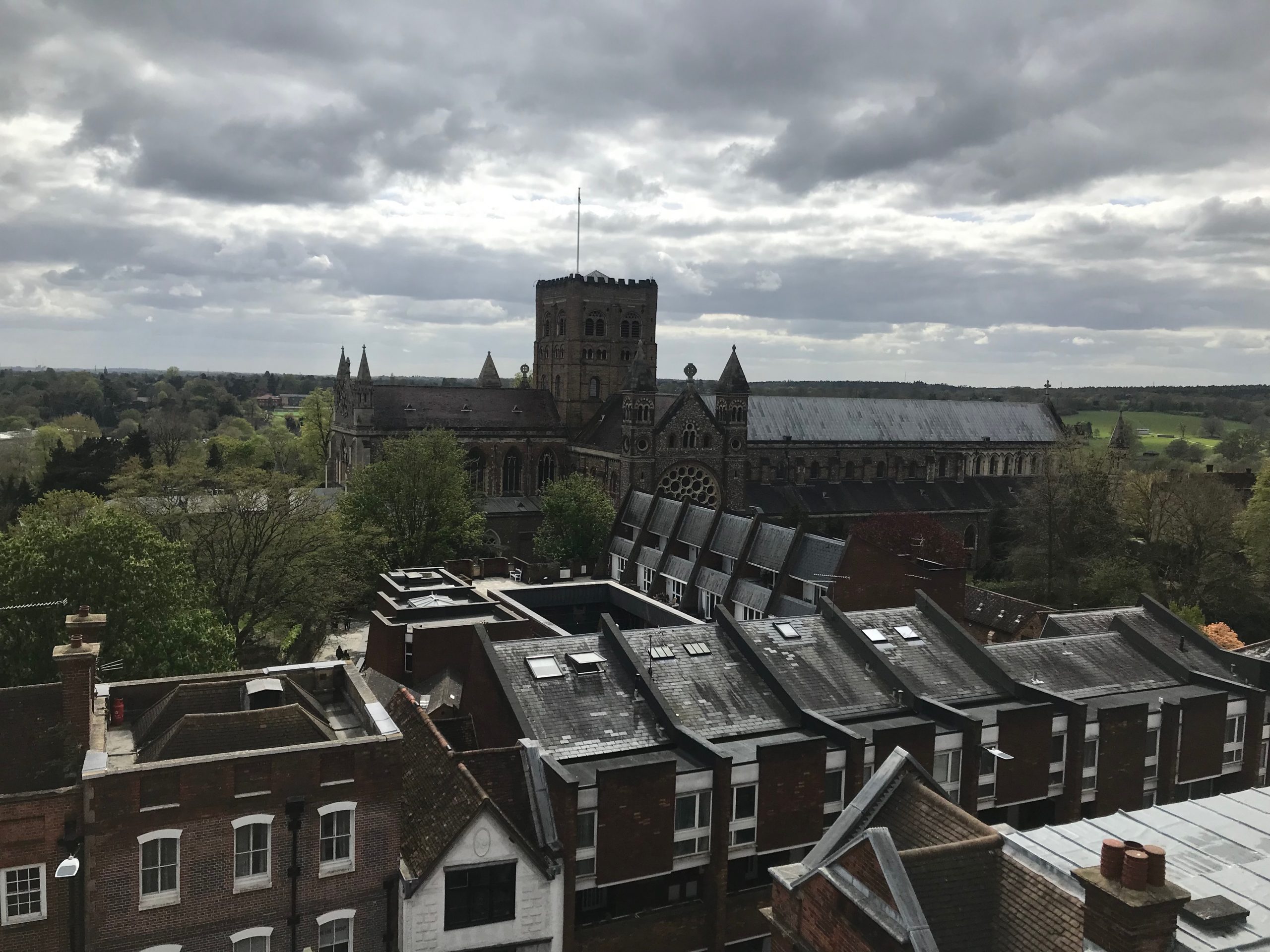
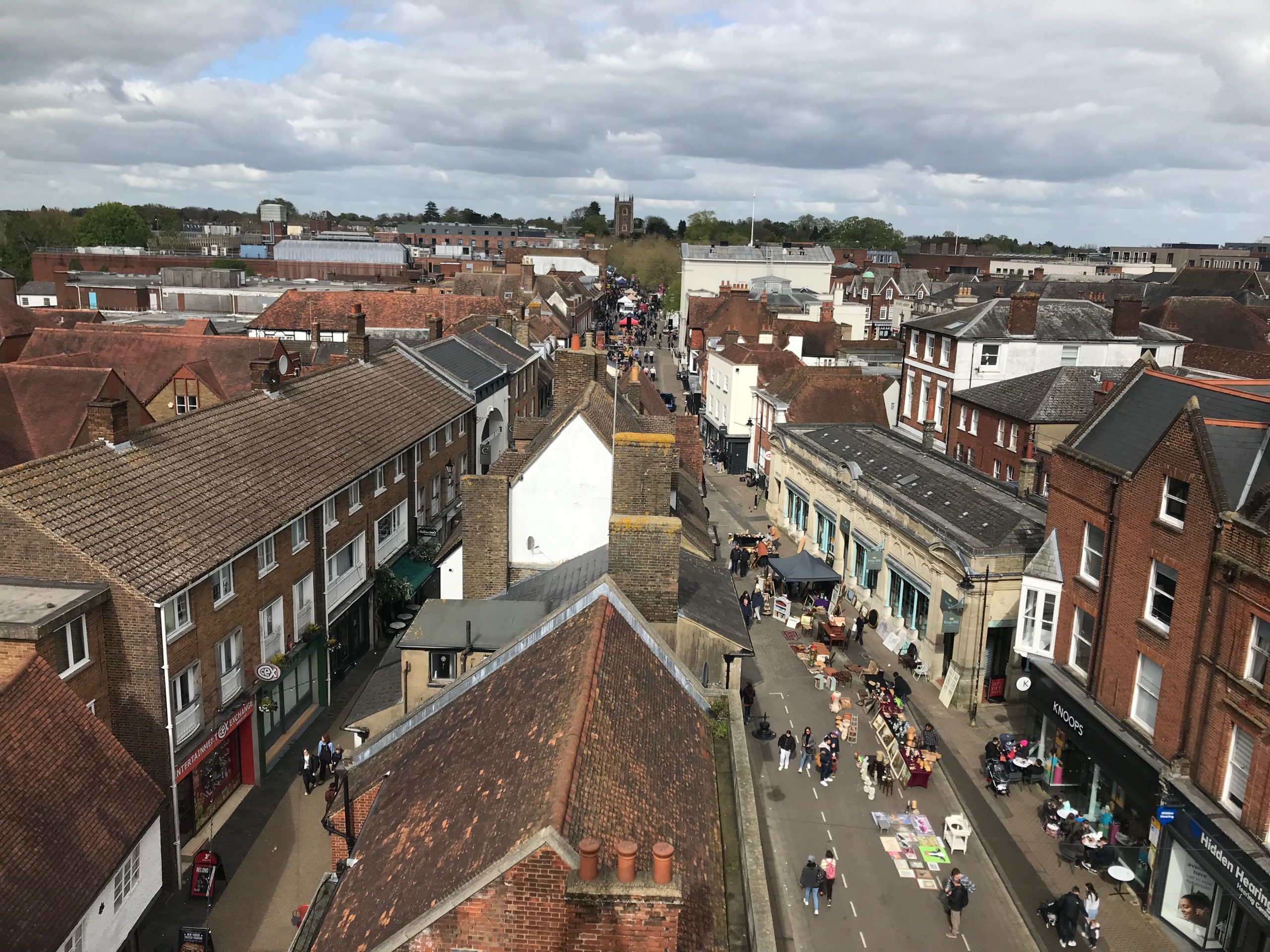
There are a total of 93 steps to climb to reach the top and it should be noted that this is a steep stone spiral staircase. Once you are at the top there is a magnificent 360 degree view of the surrounding city.

A view form the roof of teh clock tower towards St Albans Abbey
A view towards St Albans Abbey
A view from the top of St Albans Clock Tower towards the market
A view towards St Albans’ Market Place

More details about the clock tower, and a video tour, can be found on the St Albans Museums website here.

Looking for more things to do and places to visit in Hertfordshire?

Why not see where else Penny has travelled to in Hertfordshire or the neighbouring counties of Bedfordshire and Buckinghamshire.

Filed Under: Hertfordshire, St Albans

Vintage Water Chute, Northstead Manor Gardens, Scarborough

April 24, 2024 by Penny Leave a Comment

I love vintage seaside attractions and was therefore delighted to find the vintage Water Chute in Northstead Manor Gardens, Scarborough. Located right next to the station for the North Bay Railway, close to Peasholm Park and originally dating from 1932, this is one of only three water chutes left in the UK.

A view showing the timber building from which the water chute is launched and the metal track leading down into the lake. You can see a railway track passing under the metal track of the water chute. On the side of the building is a large banner reading "Scarborough North Bay Railway Water Chute"

The water chute operates by running down a short ramp from a timber cabin, into the lake’s waters. You are then hauled back up the ramp, backwards, by a big cable, before being released down into the lake for a second time.

In comparison to modern day log flumes, it’s actually quite a sedate ride with little danger of getting really wet. But if you think back to how it must have felt to ride the water chute back in 1932 when people weren’t used to fast rollercoasters and fairground rides throwing them all over the place, it must have been quite an exhilarating ride after a genteel walk round the nearby Peasholm Park.

History of the Vintage Water Chute

The water chute was designed by Charles Wicksteed, a name that many parents may have spotted on playground equipment across the UK. The Wicksteed company (now Wicksteed Leisure Limited) still make playground equipment and the words of their founder are proudly written on their website:

“The Play Ground should not be put in a corner behind railings, but in a conspicuous and beautiful part of a Park, free to all, where people can enjoy the play and charming scenery at the same time; where mothers can sit, while they are looking on and caring for their children”

The vintage water chute in Scarborough is the third oldest in the country and one of only three surviving such rides from before the Second World War. Historic England describe it as “as an evocative example of early 20th Century amusements aimed primarily at children and families, with a rider experience that is the same as when the ride first opened”.

The first water chute was opened in Earl’s Court in London in 1893 and this was followed by chutes at Southport Pleasure Beach (1903) and Blackpool Pleasure Beach (1907). They were incredibly popular in their day and I’m particularly intrigued having seen photos of the one that was next to Southend Pier in Essex.

Remaining vintage water chutes in the UK

Today two more vintage water chutes survive. The most famous example is at Wicksteed Park in Kettering (linked to Charles Wicksteed as the name suggests) and in East Park, Hull. When we went on the water chute in Scarborough the man running things was incredibly knowledgeable about the history of the chute and about Charles Wicksteed himself. He informed me that the Hull chute has been modernised and electrified over the years and as such is often broken. That’s certainly backed up by this article about the boat derailing only months after it was reopened with great fanfare following a refurbishment.

Scarborough’s Vintage Water Chute

The red boat part of the water chute which looks a bit like a basic sleigh that Father Christmas might ride in. This is taken at the top of the water chute and you can see the gap in the barriers where the boat will pass through to go down the metal ramp into the lake below.

The vintage water chute in Scarborough is run by the people behind the neighbouring North Bay Railway. You buy tickets for the chute in the shop bit of the railway before climbing up to the top of the chute to take your ride.

Tickets cover two goes on the chute and at the time of writing (April 2024) are £3.50 per person.

The water chute was refurbished by the owners of the North Bay Railway back in 2007. At points before that the ride was part of the Kinderland activity park that was on the site but time saw it become derelict and under threat of permanent closure. The water chute became Grade II listed in 2017.

What else to do in Scarborough

Looking for other things to do in the Scarborough area? Why not see where else we have visited in this North Yorkshire seaside town here.

Filed Under: Scarborough

  • Page 1
  • Page 2
  • Page 3
  • …
  • Page 12
  • Next Page »

Primary Sidebar

Google Ads

Categories

  • Destinations
    • Europe
      • Channel Islands
        • Guernsey
      • Denmark
      • France
      • Sweden
      • The Netherlands
      • United Kingdom
        • England
          • Bedfordshire
          • Buckinghamshire
          • Devon
          • Essex
          • Gloucestershire
          • Hertfordshire
            • St Albans
          • London
          • Norfolk
          • North Yorkshire
            • Scarborough
            • Whitby
          • Oxfordshire
            • Oxford
        • Isle of Wight
        • Scotland
          • Edinburgh
    • Islands
  • Family Days Out
  • General Travel Writing
  • Local Things To Do
  • Museums
  • National Trsut
  • National Trust
  • Transport
    • Air Travel
    • Land Travel
      • Train Travel
        • Funiculars
        • Heritage Railways
        • Miniature Railways
    • Sea Travel
  • Travel Tips
    • Accommodation
    • Driving
  • Tube Stop Baby

Copyright © 2026 · Genesis Sample on Genesis Framework · WordPress · Log in